7 Day Vegan Anti-Inflammatory Meal Plan — Full 7-Day Guide
7 Day Vegan Anti-Inflammatory Meal Plan — Full 7-Day Guide
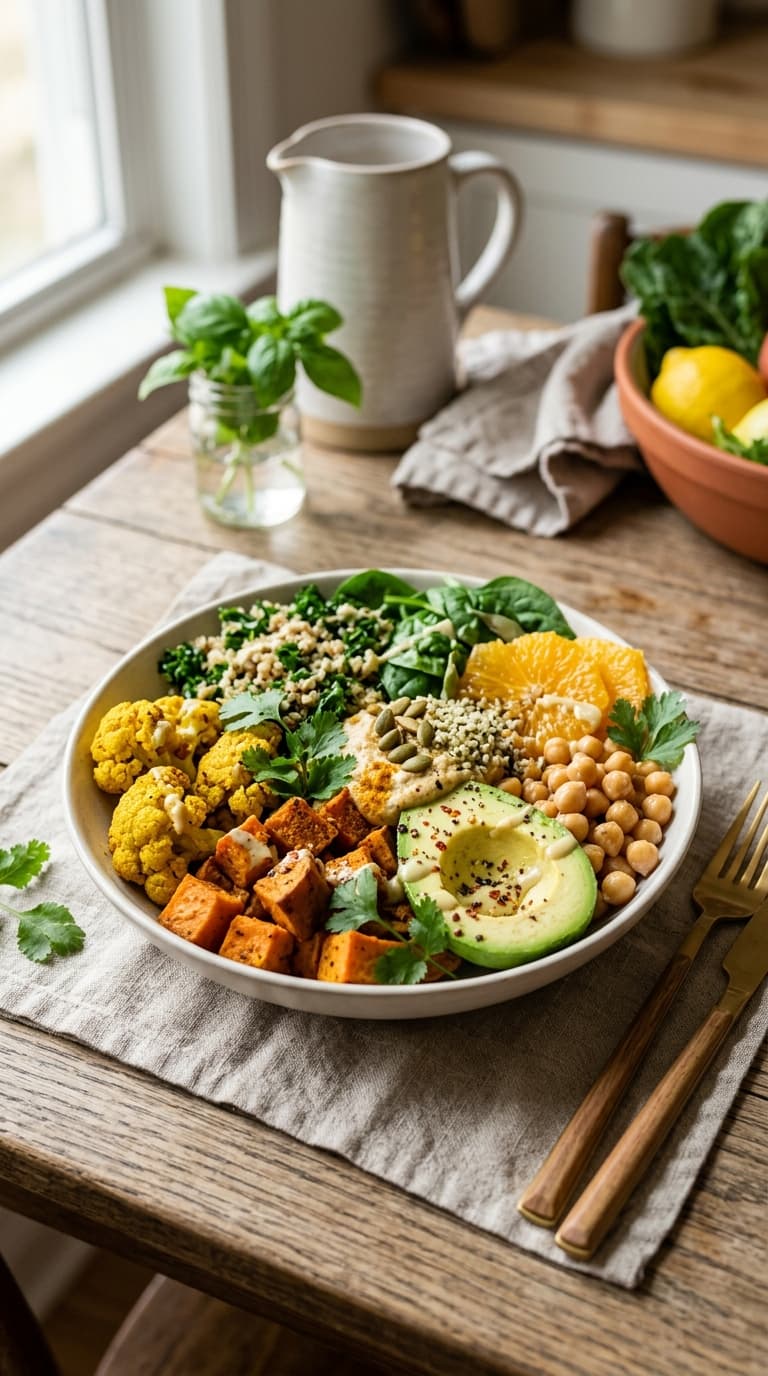
Let’s be real — inflammation is basically your body’s drama queen. A little is fine, even helpful, but chronic inflammation? That’s the kind that quietly wrecks your energy, your joints, your digestion, and your mood. The good news is, food is one of the most powerful tools you have to fight back. And yes, a fully plant-based approach can absolutely do the job.
I put together this 7-day vegan anti-inflammatory meal plan after spending way too many mornings waking up feeling puffy and sluggish for no obvious reason. Turns out, what I was eating was doing me zero favors. Once I shifted toward whole, plant-based foods packed with anti-inflammatory compounds, the difference was noticeable within a week. So let me walk you through exactly what that looks like, day by day.
What Makes a Meal Anti-Inflammatory?
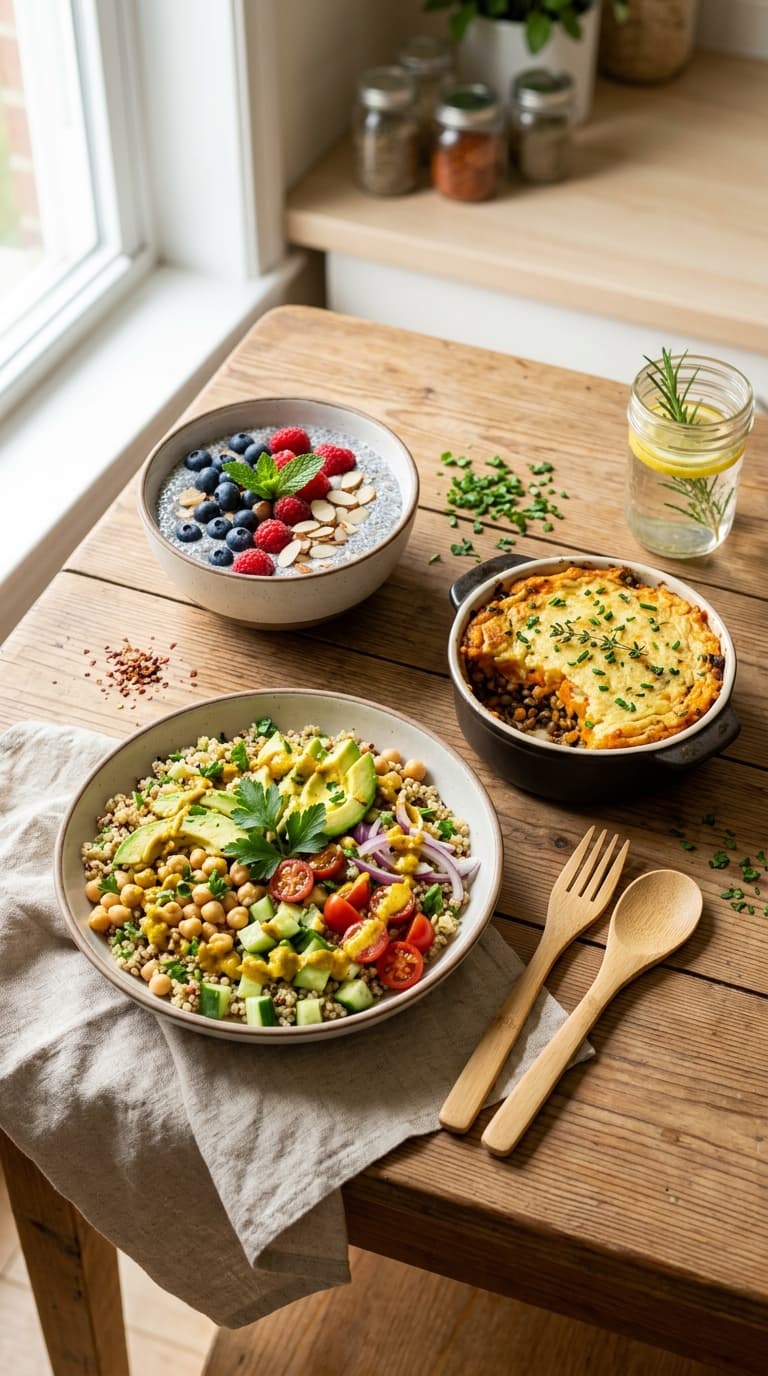
Before we jump into the actual plan, let’s quickly cover what you’re actually looking for in anti-inflammatory eating — because it’s not just about avoiding meat.
Anti-inflammatory foods typically share a few key traits:
- Rich in antioxidants — think berries, dark leafy greens, colorful veggies
- High in omega-3 fatty acids — flaxseeds, chia seeds, walnuts
- Loaded with polyphenols — found in green tea, turmeric, olive oil, legumes
- Low in refined sugar and processed oils — these are the actual culprits
- Full of fiber — which supports gut health, and your gut is basically inflammation HQ
The goal here isn’t perfection. It’s consistency. Eating well six days out of seven is infinitely better than crash-dieting for one week and reverting to takeout the next. FYI, this plan keeps things realistic, not aspirational.
The Anti-Inflammatory Pantry You’ll Need
Stock these before Day 1 and you’ll thank yourself later:
- Turmeric and black pepper (always together — black pepper boosts turmeric absorption by up to 2,000%)
- Extra virgin olive oil
- Canned or dry chickpeas, lentils, black beans
- Quinoa, brown rice, oats
- Chia seeds, flaxseeds, hemp seeds
- Frozen berries, fresh ginger, garlic
- Leafy greens — spinach, kale, arugula
- Walnuts and almonds
- Coconut milk and oat milk
These ingredients form the backbone of almost every meal this week. Once they’re in your kitchen, you’re already halfway there.
Day 1 — Starting Strong
Breakfast: Golden Milk Chia Pudding
Start the week with something that feels indulgent but is secretly a powerhouse. Mix chia seeds with oat milk, a pinch of turmeric, cinnamon, and maple syrup. Let it sit overnight. Top with blueberries in the morning.
Turmeric first thing in the morning? Yes, please. Your joints will appreciate it. For your morning cup, skip the sugary stuff — a vegan coffee creamer made at home pairs beautifully with this kind of breakfast spread.
Lunch: Lentil and Spinach Soup
Simmer green lentils with garlic, onion, diced tomatoes, cumin, and a big handful of spinach. Drizzle with olive oil before serving. This is warming, filling, and takes about 30 minutes.
Lentils are underrated. They’re cheap, high in protein, and packed with fiber that feeds your gut bacteria — the good kind.
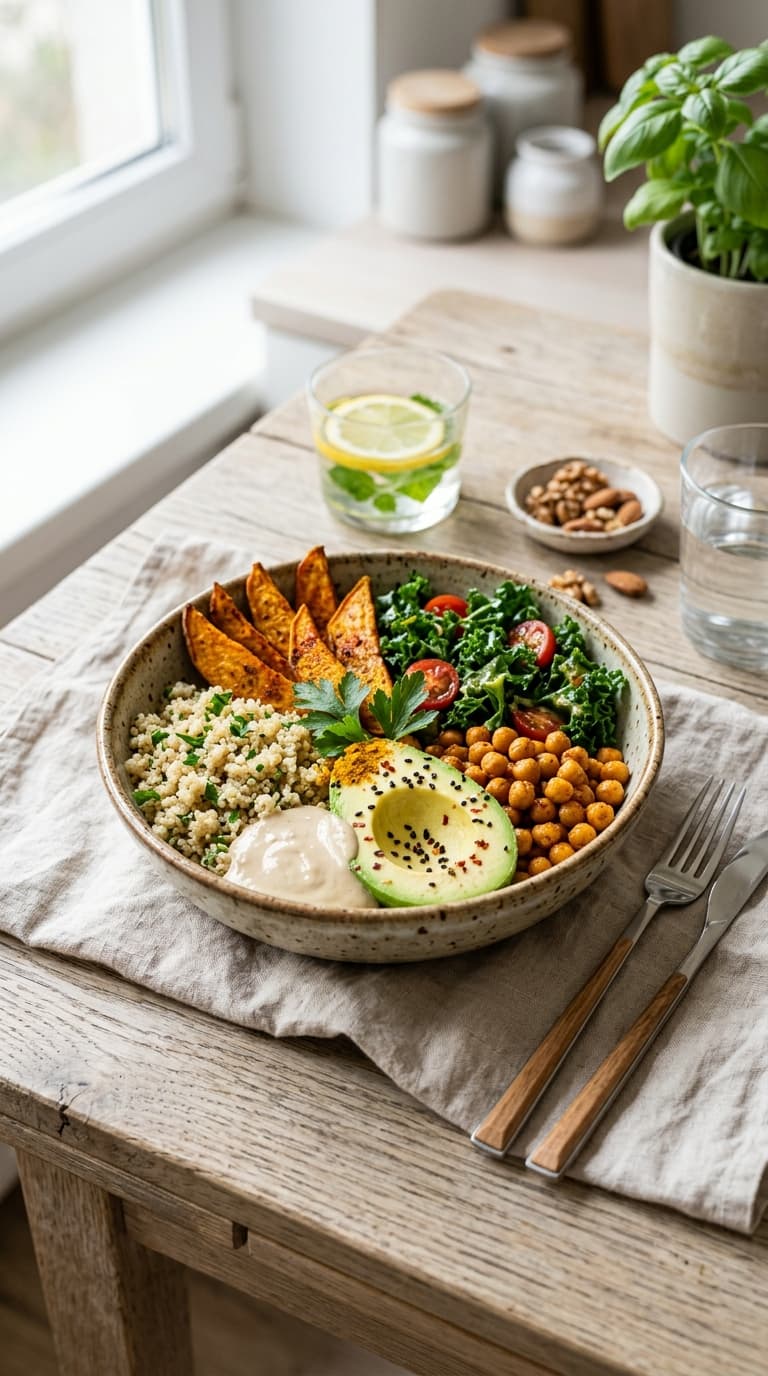
Dinner: Turmeric Roasted Chickpea Bowl
Toss chickpeas in olive oil, turmeric, paprika, and garlic. Roast until crispy. Serve over quinoa with a tahini drizzle and roasted broccoli.
Simple. Satisfying. Anti-inflammatory from top to bottom.
Day 2 — Building Momentum
Breakfast: Berry Smoothie Bowl
Blend frozen mixed berries, a banana, and a tablespoon of flaxseed with oat milk. Pour into a bowl and top with granola, sliced kiwi, and hemp seeds.
Berries are your best friend in anti-inflammatory eating. Anthocyanins — the pigments that make berries purple and red — actively reduce oxidative stress in the body.
Lunch: Avocado and Chickpea Salad Wrap
Mash chickpeas with avocado, lemon juice, salt, and a tiny bit of cayenne. Wrap in a whole wheat tortilla with arugula and cucumber.
This takes ten minutes. If that still sounds like too much effort, IMO, you might need more sleep than a meal plan 🙂
Dinner: Black Bean and Sweet Potato Tacos
Roast sweet potato cubes with cumin and chili powder. Warm black beans with garlic. Pile both into corn tortillas and top with salsa, lime juice, and fresh cilantro.
Sweet potatoes bring beta-carotene and a natural sweetness that makes this dinner feel like a treat. Not everything healthy has to taste like punishment.
Day 3 — Midweek Reset
Breakfast: Overnight Oats with Walnuts and Ginger
Mix rolled oats with oat milk, grated fresh ginger, a teaspoon of cinnamon, and a drizzle of maple syrup. Top with walnuts and a sliced banana in the morning.
Ginger deserves way more credit. It contains gingerols and shogaols — compounds that actively inhibit inflammatory pathways. Think of it as nature’s ibuprofen (without the stomach lining issues).
Lunch: Rainbow Veggie Quinoa Bowl
Cook quinoa. Top with shredded purple cabbage, shredded carrots, edamame, cucumber, and avocado. Dress with a sesame-ginger vinaigrette.
The more colors on your plate, the broader the spectrum of antioxidants you’re getting. Eat the rainbow — that’s not just a kindergarten poster, that’s actual nutrition science.
Dinner: Coconut Lentil Curry
Cook red lentils in coconut milk with turmeric, ginger, garlic, and curry powder. Serve over brown rice with a wedge of lime. Garnish with fresh cilantro.
This one tastes like it took hours. It takes 25 minutes. That’s the magic of red lentils — they cook fast and absorb flavor like pros.
Day 4 — Keep the Energy Up
Breakfast: Green Smoothie
Blend kale, frozen mango, half a banana, chia seeds, and oat milk until smooth. Add a tiny knob of fresh ginger if you’re feeling bold.
If you’re new to green smoothies and skeptical — fair enough. But the mango completely masks the kale flavor. You barely know it’s there.
Lunch: White Bean and Tomato Stew
Simmer cannellini beans with crushed tomatoes, garlic, rosemary, and spinach. Drizzle with extra virgin olive oil. Serve with a slice of sourdough bread.
White beans are a quiet anti-inflammatory hero — high in fiber, magnesium, and folate. Plus, this stew reheats beautifully, so make extra.
Dinner: Stir-Fried Tofu with Broccoli and Brown Rice
Pan-fry firm tofu until golden. Toss with broccoli, bell peppers, garlic, and a sauce of tamari, ginger, sesame oil, and a dash of rice vinegar. Serve over brown rice.
Broccoli contains sulforaphane, one of the most studied anti-inflammatory compounds in the plant world. This dinner basically fights inflammation on multiple fronts simultaneously.
Day 5 — Friday Feels
Breakfast: Banana Flaxseed Pancakes
Mash a ripe banana with ground flaxseed, oat flour, oat milk, and a pinch of cinnamon. Pan-fry in coconut oil until fluffy. Serve with blueberries and a drizzle of maple syrup.
Yes, these are actually good. Not “good for vegan pancakes” — just good.
Lunch: Roasted Veggie and Hummus Pita
Roast zucchini, bell peppers, and red onion with olive oil and herbs. Stuff into whole wheat pita with hummus and arugula.
Hummus is just blended chickpeas and tahini, and chickpeas are loaded with anti-inflammatory fiber and protein. Sometimes the simplest foods win.
Dinner: Walnut and Mushroom Bolognese
Sauté mushrooms and walnuts together with garlic, onion, crushed tomatoes, and Italian herbs. Toss with whole grain spaghetti and fresh basil.
Walnuts are one of the few plant foods with a decent amount of ALA omega-3s. Combined with the antioxidants in tomatoes, this pasta is doing a lot of heavy lifting nutritionally.
Day 6 — Weekend Slow Down
Breakfast: Açaí Bowl
Blend frozen açaí packets with banana and a splash of oat milk until thick. Top with granola, fresh strawberries, hemp seeds, and a drizzle of almond butter.
This is breakfast that looks Instagram-worthy. Açaí contains anthocyanins and polyphenols that make it one of the most antioxidant-dense foods you can eat. Treat yourself.
Lunch: Kale and Roasted Beet Salad
Massage kale with lemon juice and olive oil (yes, massage it — it actually softens the fibers and makes it taste better). Top with roasted beets, walnuts, orange segments, and a balsamic glaze.
If you’ve never tried massaging your kale, you’ve been missing out. It sounds absurd, but it genuinely transforms the texture. Trust the process.
Dinner: Spiced Cauliflower and Chickpea Sheet Pan
Toss cauliflower florets and chickpeas with turmeric, cumin, coriander, and olive oil. Roast on a single sheet pan. Serve with a green tahini sauce and warm flatbread.
Sheet pan meals are a gift. Minimal cleanup. Maximum flavor. This one comes together in about 40 minutes with almost no active cooking time.
Pair this dinner with one of these anti-inflammatory tea blends for better health — a warm cup of ginger or turmeric tea after this meal is genuinely one of life’s better moments.
Day 7 — Finishing Strong
Breakfast: Turmeric Scrambled Tofu
Crumble firm tofu into a pan with olive oil, turmeric, garlic powder, nutritional yeast, and spinach. Cook until heated through. Serve with whole grain toast and sliced avocado.
This scramble hits all the boxes — protein, healthy fat, greens, and anti-inflammatory spices all before 9 AM. Solid start to close out the week.
Lunch: Moroccan Spiced Chickpea and Carrot Soup
Simmer chickpeas and carrots with cumin, coriander, cinnamon, ginger, and vegetable broth. Blend half the soup for a creamy-chunky texture. Top with a swirl of olive oil and fresh parsley.
The combination of cinnamon and ginger isn’t just delicious — both spices carry real anti-inflammatory and antioxidant properties that complement each other well.
Dinner: Buddha Bowl with Miso-Ginger Dressing
Build your bowl with brown rice, roasted sweet potato, steamed edamame, shredded purple cabbage, sliced avocado, and sesame seeds. Drizzle with a miso-ginger dressing (white miso, grated ginger, rice vinegar, sesame oil, a little maple syrup).
Miso is fermented — which means it brings probiotics to the party. Gut health and inflammation are deeply connected, so feeding your microbiome matters here.
Drinks That Support Your Anti-Inflammatory Goals
Don’t sleep on what you’re drinking this week. What’s in your cup matters as much as what’s on your plate.
- Green tea — packed with EGCG, one of the most potent anti-inflammatory polyphenols around
- Ginger lemon water — simple, cheap, effective first thing in the morning
- Golden milk latte — turmeric, oat milk, black pepper, a little sweetener
- Tart cherry juice — shown in studies to reduce markers of inflammation
If you’re a tea person (and honestly, why wouldn’t you be), these herbal teas for better digestion are a great companion to this plan. And if you want to keep things calm and restorative in the evenings, check out these herbal tea blends for relaxation and sleep — a mug before bed fits perfectly into an anti-inflammatory lifestyle.
For your morning ritual, skip the heavy sugary lattes. Something like a healthy coffee recipe with nut milk and natural sweeteners keeps things plant-based and inflammation-friendly without sacrificing the joy of a good morning cup.
Foods to Avoid This Week
Here’s what to minimize — and ideally eliminate — for the full seven days:
- Refined sugar — drives inflammatory cytokine production
- Refined vegetable oils (sunflower, corn, soybean) — high in omega-6, which tips the balance toward inflammation
- Processed foods and white flour
- Alcohol — even moderate amounts increase inflammatory markers
- Artificial additives and preservatives
None of this is forever. This is a seven-day reset. But noticing how you feel without these things for a week is genuinely eye-opening.
Tips to Actually Stick to This Plan
Because a meal plan that looks great on paper and falls apart by Wednesday is not helping anyone.
- Batch cook on Sunday — make a big pot of grains, roast a tray of veggies, cook a batch of lentils. It cuts weekday cooking time dramatically.
- Keep smoothie ingredients pre-portioned in the freezer — grab a bag in the morning and blend. Done.
- Don’t skip the fats — olive oil, avocado, and nuts are essential. Fat-free anti-inflammatory eating misses the point.
- Read labels on sauces and condiments — hidden sugars and seed oils sneak in constantly.
- Meal prep two or three dinners at once — leftovers are your best friend during a busy week.
The Bottom Line
A 7-day vegan anti-inflammatory meal plan isn’t a cure-all — but it’s a genuinely powerful start. By the end of the week, most people notice improved energy, less bloating, clearer skin, and better sleep. That’s not placebo. That’s your body responding to food it actually knows how to work with.
The key is variety — rotating through different colorful plants, spices, legumes, and whole grains means you’re hitting a wide spectrum of anti-inflammatory compounds, not just relying on the same three ingredients.
So give it the full seven days. Cook the meals, drink the tea, skip the junk. Your body is going to tell you pretty clearly how it feels about the change — and spoiler: it’s probably going to feel a lot better 🙂