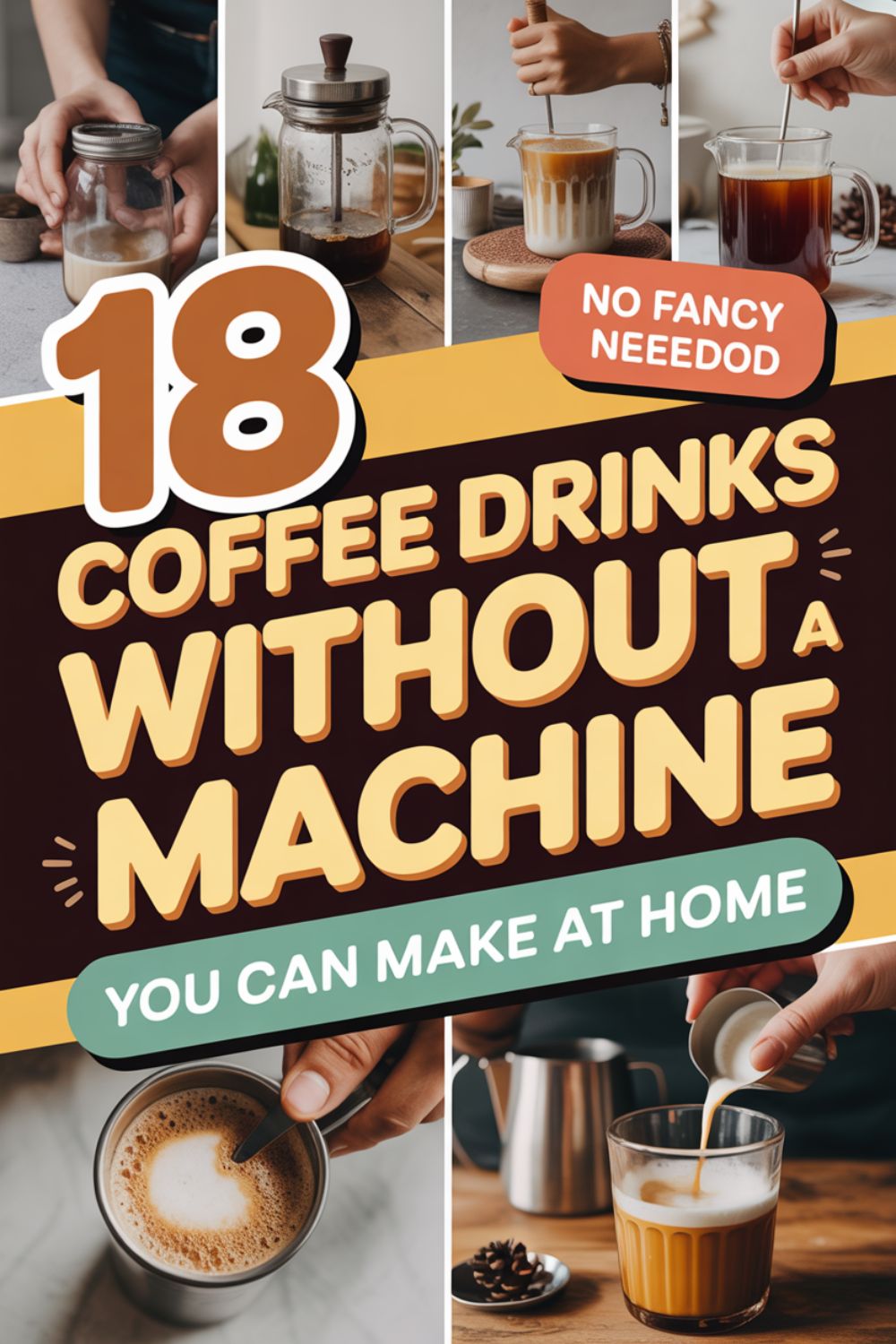
18 Coffee Drinks You Can Make Without a Machine
Your espresso machine died. Or maybe you never had one in the first place. Either way, you’re staring at a bag of ground coffee wondering if instant is your only option. Spoiler alert: it’s not. You don’t need a $400 contraption taking up counter space to make cafe-quality drinks at home. All you need is a little creativity, some basic kitchen tools you already own, and maybe five minutes of your morning.
I’ve been making coffee without fancy equipment for years, partly by choice and partly because I’m too lazy to clean a machine every single day. What I’ve learned is that some of the best coffee drinks are ridiculously simple. No milk frothers, no complicated brewing ratios, no YouTube tutorials required.
The coffee snobs might come for me, but honestly? Most mornings I just want something that tastes good and doesn’t require me to read an instruction manual before I’ve had caffeine. These 18 drinks deliver exactly that. Some are hot, some are cold, some are sweet enough to double as dessert. All of them skip the machine drama entirely.
Why Ditch the Machine Anyway?
Before we jump into the drinks, let’s talk about why machine-free coffee isn’t just a backup plan. First off, coffee machines are expensive. Even mid-range ones cost more than my monthly grocery budget, and that’s before you factor in the specialty pods, descaling solutions, and inevitable repairs.
Then there’s the cleaning situation. If you’ve ever owned an espresso machine, you know the drill: daily rinsing, weekly deep cleans, monthly descaling. Miss one step and your next latte tastes like burnt plastic mixed with regret. No thanks.
But here’s the real kicker—most machines lock you into one style of coffee. You buy a Keurig, you’re stuck with pods. You get an espresso machine, you’re making espresso-based drinks exclusively. Going machine-free means you can make cold brew variations on Monday, whipped coffee on Tuesday, and a Vietnamese-style brew on Wednesday without switching equipment.
Plus, according to research from the National Coffee Association, the ritual of manual coffee preparation can actually enhance the drinking experience. Something about slowing down and being intentional makes that first sip hit different.
Pro Tip
Invest in a good quality burr grinder if you’re serious about machine-free coffee. Fresh-ground beans make a massive difference, and you’ll taste it immediately. I use this affordable hand grinder that takes maybe 60 seconds to grind enough for one cup.
The Essential Tools (You Probably Already Own)
The beauty of ditching the machine is that you don’t need much. Check your kitchen right now—I bet you’ve got everything already. A regular saucepan works for heating water and milk. A whisk or fork handles any mixing or frothing. Mason jars are perfect for cold brew and shaken drinks.
If you want to get slightly fancy, grab a French press. They’re like $20, last forever, and make legitimately good coffee. A small milk frother (the handheld battery-operated kind) is also clutch for lattes and cappuccinos, though you can honestly get decent foam with just a jar and some elbow grease.
For iced drinks, I swear by reusable coffee ice cubes. Freeze leftover coffee in an ice cube tray so your iced coffee doesn’t get watery. Game changer.
If you’re looking for more creative ways to elevate your coffee game, check out these homemade coffee syrups that’ll make your drinks taste like they came from a bougie cafe.
1. Classic French Press Coffee
Let’s start with the obvious one. French press coffee is smooth, rich, and takes about four minutes total. Coarse grind your beans, add hot water (not boiling—aim for around 200°F), stir, wait four minutes, press down, pour. Done.
The French press doesn’t filter out the coffee oils like paper filters do, which means you get a fuller body and more pronounced flavor. Some people find it too strong or gritty. I find it perfect. Get Full Recipe
Why It Works Without a Machine
The French press is literally just a jar with a plunger. No electricity, no complicated parts, nothing to break. You control the steep time, the water temperature, and the coffee-to-water ratio. It’s basically foolproof once you’ve made it twice.
2. Cowboy Coffee (Yes, Really)
This is how people made coffee before machines existed, and it still works. Boil water in a pot, add coarse coffee grounds directly to the water, let it steep for a few minutes, then slowly pour into your cup while keeping the grounds in the pot. It’s rustic, it’s old-school, and it honestly tastes great if you don’t mind a few stray grounds.
I make this when I’m camping or when my French press is dirty and I can’t be bothered to wash it. Just use a fine-mesh strainer if you’re picky about sediment. Get Full Recipe
“I tried cowboy coffee on a whim during a power outage and now I make it every weekend. There’s something satisfying about keeping it simple. Plus, my husband thinks I’m outdoorsy now.”
3. Mason Jar Cold Brew
Cold brew is hands-down the easiest coffee to make, you just have to plan ahead. Combine coarse coffee grounds and cold water in a mason jar (1:4 ratio), stir, cover, and leave it on your counter or in the fridge for 12-24 hours. Strain through a fine-mesh strainer or cheesecloth, and you’ve got concentrated cold brew that lasts a week.
The flavor is smooth, low-acid, and never bitter. You can drink it straight over ice, dilute it with water or milk, or use it as a base for all kinds of iced drinks. I make a big batch every Sunday and I’m set for the week. Get Full Recipe
Want to mix things up? These cold brew variations will keep your summer mornings interesting.
Quick Win
Freeze leftover cold brew in ice cube trays. Add them to your iced coffee so it doesn’t get diluted. You can also toss a few into smoothies for an instant caffeine boost.
4. Whipped Dalgona Coffee
Remember when this took over the internet in 2020? Turns out it’s not just a trend—it’s actually delicious. Mix equal parts instant coffee, sugar, and hot water, then whip it with a hand mixer or whisk until it’s thick and fluffy. Spoon it over milk (hot or cold) and you’ve got a cafe-worthy drink.
I use this little handheld mixer and it takes maybe two minutes. The texture is almost like mousse, and it looks ridiculously impressive for how easy it is. Get Full Recipe
5. Stovetop “Espresso” (Moka Pot Style)
Okay, technically a Moka pot is equipment, but it’s not a machine—it’s just a little stovetop kettle. Fill the bottom with water, add coffee to the filter basket, screw on the top, and heat it on the stove. Pressure pushes the water through the coffee and you get strong, concentrated brew that’s pretty close to espresso.
It’s not true espresso (no crema, lower pressure), but it’s strong enough to make lattes, cappuccinos, and Americanos. Plus Moka pots cost like $30 and last decades. IMO, it’s the best investment you can make if you want espresso-style drinks without the espresso-machine price tag. Get Full Recipe
6. Vietnamese Iced Coffee
This is my go-to when I want something sweet and strong. Brew dark roast coffee (French press works great), mix it with sweetened condensed milk, and pour over ice. The sweetness balances the bitter coffee perfectly, and the texture is almost creamy without adding actual cream.
Traditionally it’s made with a Vietnamese coffee filter (phin), which is just a small metal drip filter that sits on top of your cup. But honestly? Any strong coffee works. Just don’t skimp on the condensed milk. Get Full Recipe
If you’re into international coffee styles, you’ll love these coffee and pastry pairings from around the world.
7. Pour-Over Coffee
Pour-over gets hyped as some kind of artisan technique, but it’s genuinely just pouring hot water over coffee grounds in a filter. You can buy a proper pour-over cone, or you can literally just set a regular coffee filter over a mug and pour slowly.
The key is the slow, circular pour. It extracts more flavor than dumping all the water at once. The result is clean, bright, and you can taste all the subtle notes in your beans. It’s a bit precious, sure, but the coffee is legitimately excellent. Get Full Recipe
8. Instant Coffee Latte (Upgraded)
Instant coffee doesn’t have to taste like sadness. Dissolve it in a tiny bit of hot water to make a concentrated shot, then add steamed or frothed milk. Heat your milk in a saucepan, whisk it vigorously or use a handheld frother, and pour it over the coffee.
Add a dash of vanilla extract or a sprinkle of cinnamon and suddenly your instant coffee tastes like a $5 latte. I keep instant around specifically for lazy mornings when I can’t deal with brewing but still want something better than straight black instant. Get Full Recipe
Kitchen Tools That Make Machine-Free Coffee Easier
These are the tools I actually use every week. Not sponsored, just genuinely helpful.
Physical Products:
Handheld Milk Frother – Battery-powered, takes 30 seconds, works for lattes and matcha.
Glass French Press (34 oz) – Makes enough for two big mugs, doesn’t stain or retain flavors.
Reusable Coffee Filter – Zero waste, fits most pour-over cones, saves money on paper filters.
Digital Products & Resources:
Coffee Brewing Ratios Guide (PDF) – Cheat sheet for every brewing method, laminate it and stick it on your fridge.
Home Barista Video Course – Learn latte art, milk steaming, and flavor pairing without a $3,000 machine.
Coffee Recipe eBook Bundle – 100+ machine-free recipes, from basics to fancy seasonal drinks.
9. Shaken Iced Coffee
Starbucks charges extra for this, but it’s literally just coffee, ice, and optional sweetener shaken together in a jar. The shaking aerates the coffee, makes it a bit frothy, and chills it fast. Add a splash of milk or a pump of homemade syrup and you’re golden.
I use a mason jar with a tight lid. Shake for 15-20 seconds until the outside of the jar gets frosty cold, then strain into a glass. It’s ridiculously refreshing and takes less time than driving to a coffee shop. Get Full Recipe
10. Cinnamon Spiced Coffee
Add a cinnamon stick or a pinch of ground cinnamon to your coffee grounds before brewing. The spice infuses into the coffee as it brews, giving you this warm, cozy flavor without adding sugar or syrup.
This works with French press, pour-over, cowboy coffee—basically any method where the grounds steep in water. You can also add cardamom, nutmeg, or cloves if you’re feeling adventurous. It’s like fall in a mug, year-round. Get Full Recipe
For more flavor ideas, check out these homemade vegan creamers that add richness without dairy.
11. Protein Coffee (Proffee)
This became huge on TikTok and for good reason—it’s breakfast and coffee in one. Brew your coffee however you want, let it cool slightly, then blend it with a scoop of protein powder and ice. Some people add a frozen banana for creaminess. I usually just do vanilla protein powder, coffee, and a handful of ice.
The protein powder makes it thick and filling, almost like a milkshake. Fair warning: not all protein powders blend well with coffee. Whey tends to clump. I use plant-based vanilla protein and it mixes smooth every time. Get Full Recipe
“I started making proffee instead of buying breakfast sandwiches and saved literally $120 in a month. Plus I don’t crash at 10 AM anymore. Highly recommend.”
12. Maple Cinnamon Cold Foam Coffee
Cold foam is just milk frothed until it’s thick and airy, then spooned over iced coffee. Make cold brew or iced coffee, then pour cold milk into a jar with a lid (I use about 1/4 cup milk). Add a drizzle of maple syrup and a pinch of cinnamon, seal it, and shake hard for 30-45 seconds until it’s foamy.
Spoon the foam over your iced coffee and watch it slowly sink in. It’s beautiful, it tastes incredible, and it costs maybe 50 cents to make at home versus $6 at a coffee shop. Get Full Recipe
13. Turkish Coffee
Turkish coffee is intense, unfiltered, and traditionally made in a small copper pot called an ibrik (though a small saucepan works fine). Use very finely ground coffee—almost powdered. Add coffee, sugar, and water to the pot, heat slowly until it foams up, remove from heat, let it settle, then heat again.
Pour it into a small cup, grounds and all. Let the grounds settle at the bottom before drinking. It’s strong, thick, and you sip it slowly. Not everyone’s cup of tea (or coffee, I guess), but it’s a cool experience and requires zero equipment. Get Full Recipe
Speaking of coffee rituals, you might enjoy reading about coffee traditions from around the world.
14. Butter Coffee (Bulletproof Style)
Before you judge, hear me out. Blending coffee with grass-fed butter and MCT oil creates this creamy, frothy drink that’s supposed to boost energy and mental clarity. I was skeptical too, but it’s surprisingly good if you’re into savory breakfast drinks.
Brew strong coffee, add a tablespoon of butter and a teaspoon of MCT or coconut oil, then blend with a handheld immersion blender for 20 seconds. It gets frothy like a latte and keeps you full for hours. Not for everyone, but worth trying once. Get Full Recipe
15. Iced Coffee Smoothie
This is basically a coffee milkshake disguised as a healthy breakfast. Blend cold coffee with a frozen banana, a handful of ice, a splash of milk, and optional add-ins like cocoa powder, peanut butter, or dates for sweetness.
The banana makes it creamy without yogurt or ice cream, and you can pack in all kinds of nutrients (spinach, protein powder, chia seeds) without tasting them over the coffee flavor. I make this at least twice a week. Get Full Recipe
If you love coffee smoothies, you’ll definitely want to check out these 18 delicious variations for breakfast or energy boosts.
16. Honey Lavender Iced Coffee
Make a simple lavender syrup by simmering water, honey, and dried lavender buds for 5 minutes, then strain. Let it cool, then mix it into iced coffee. The floral notes are subtle and the honey adds natural sweetness without being cloying.
This is one of those drinks that sounds fancy but takes maybe 10 minutes total, and the syrup keeps in the fridge for weeks. Pro tip: a little lavender goes a long way. Don’t overdo it or your coffee will taste like soap. Get Full Recipe
17. Coconut Milk Coffee
Swap regular milk for full-fat coconut milk and thank me later. The richness and slight sweetness of coconut milk makes coffee taste almost dessert-like. Heat the coconut milk in a saucepan, froth it if you want, and pour over strong coffee.
Add a pinch of cinnamon or a drizzle of maple syrup and you’ve got a naturally sweet, dairy-free latte that’s actually satisfying. Plus coconut milk froths surprisingly well with just a whisk. Get Full Recipe
Pro Tip
Canned coconut milk froths way better than the carton kind. The higher fat content creates that thick, creamy texture you want in a latte.
18. Affogato (Coffee Dessert)
Okay, this is technically dessert, but it’s also technically coffee, so it counts. Brew a strong shot of coffee (Moka pot works great, or just very concentrated French press), and pour it over a scoop of vanilla ice cream. The hot coffee melts the ice cream slightly and you get this amazing coffee-vanilla hybrid situation.
It’s indulgent, it’s easy, and it’s the perfect ending to dinner when you want something sweet but not too heavy. You can also use coffee ice cream for maximum coffee flavor. Get Full Recipe
Want more coffee-dessert combos? These coffee desserts pair perfectly with your afternoon brew.
Tips for Making Better Machine-Free Coffee
Water Temperature Matters
Most coffee should be brewed with water between 195-205°F. Boiling water (212°F) can scorch the grounds and make your coffee bitter. Let your kettle sit for 30 seconds after boiling before pouring. Or just invest in a thermometer and take the guesswork out.
Grind Size Changes Everything
Coarse grinds for French press and cold brew. Medium for pour-over. Fine for Moka pot and Turkish coffee. Using the wrong grind size will either under-extract (weak, sour coffee) or over-extract (bitter, harsh coffee). A burr grinder gives you way more control than blade grinders.
Fresh Beans Make a Difference
Coffee starts losing flavor the moment it’s ground. Buy whole beans and grind them right before brewing. According to research published in Food Chemistry, ground coffee loses up to 60% of its aromatic compounds within 15 minutes of grinding. Store beans in an airtight container away from light and heat.
Don’t Be Afraid to Experiment
The best part about machine-free coffee is there’s no wrong way to do it. You like it strong? Use more coffee. Want it weaker? Use less. Prefer it sweet? Add whatever sweetener makes you happy. Coffee snobbery is exhausting and unnecessary. Make what tastes good to you.
Looking for more ways to customize your coffee? Try these quick 3-ingredient coffee drinks for effortless mornings.
Frequently Asked Questions
Can you really make good coffee without a machine?
Absolutely. Methods like French press, pour-over, and cold brew often produce better-tasting coffee than automatic machines because you control every variable. Plus, you avoid the stale coffee oils that build up in machine parts. The key is using fresh beans, proper water temperature, and the right grind size for your method.
What’s the easiest machine-free method for beginners?
Cold brew is the most forgiving method since it’s nearly impossible to mess up. Just mix grounds and water, wait, then strain. French press is a close second—it’s straightforward and only requires a four-minute steep time. Both methods are way more beginner-friendly than trying to dial in an espresso machine.
How do I froth milk without a machine?
The jar shake method works surprisingly well. Heat your milk, pour it into a jar with a tight lid, and shake vigorously for 30-45 seconds. You can also whisk warm milk rapidly in a bowl, or use a handheld battery-powered frother for under $15. None of these create microfoam like a steam wand, but they’ll get you decent foam for lattes.
Is machine-free coffee cheaper than buying a coffee maker?
In the long run, yes. A French press costs $20-30 and lasts for years with zero maintenance. Compare that to a $200 coffee maker that needs descaling solution, replacement parts, and eventual replacement. Plus you’re not locked into buying specific pods or filters. You just need beans, water, and basic kitchen tools.
What grind size should I use for machine-free methods?
It depends on the method. French press and cold brew need coarse grinds (think sea salt texture). Pour-over uses medium grinds (like sand). Moka pot and Turkish coffee need fine grinds (almost powder). Using the wrong grind is the #1 reason machine-free coffee tastes off, so it’s worth getting this right.
Final Thoughts
Here’s the thing about coffee machines: they’re convenient, sure, but they’re not necessary. You can make cafe-quality drinks with tools you already own and methods that take less time than waiting in a drive-thru line. Whether you’re a French press purist, a cold brew convert, or someone who just wants to save money on overpriced lattes, going machine-free opens up way more possibilities than you’d think.
I’m not saying you should toss your coffee maker in the trash (though if it breaks, maybe don’t replace it). I’m just saying that some of the best coffee I’ve ever made happened on my stovetop with a $2 can of grounds and a cheap saucepan. There’s something satisfying about keeping it simple.
Try a few of these methods and see what sticks. Maybe you’ll discover that your perfect coffee doesn’t come from a complicated machine at all—it comes from slowing down, paying attention, and actually enjoying the process. Or maybe you just want cheap iced coffee that doesn’t taste like regret. Either way, these 18 drinks have you covered.