7 day Anti-Inflammatory Meal Plan Without Nightshades
7 Day Anti-Inflammatory Meal Plan Without Nightshades
So you’ve decided to go anti-inflammatory and ditch nightshades at the same time. Respect. That’s not the easiest combo to pull off, especially when you realize tomatoes, bell peppers, eggplant, and potatoes are basically hiding in every recipe you’ve ever loved. But here’s the thing — eating this way doesn’t have to be bland, boring, or a full-time job. I’ve been down this road, and once you figure out the swaps and the rhythm, it actually gets fun. Let me walk you through a full 7-day plan that your gut (and your joints) will genuinely thank you for.
Why Skip Nightshades on Top of Going Anti-Inflammatory?
Good question. Nightshades belong to the Solanaceae plant family, and while they’re perfectly fine for most people, some folks — especially those dealing with autoimmune conditions, arthritis, or leaky gut — find that nightshades trigger inflammation or digestive irritation. The alkaloids in these plants (like solanine) can aggravate joint pain and gut lining issues in sensitive individuals.
Combining a nightshade-free approach with an anti-inflammatory diet is basically a double hit against chronic inflammation. You’re removing potential irritants and loading up on foods that actively calm your immune system. IMO, that’s a pretty smart strategy 🙂
What You Can (and Can’t) Eat
Before we get into the meal plan, let’s get the ground rules straight.
Foods to Avoid
- Nightshades: tomatoes, bell peppers, hot peppers, eggplant, white potatoes, goji berries, paprika, cayenne
- Inflammatory triggers: refined sugar, processed oils (canola, soybean), white bread, fried foods, alcohol
Foods to Embrace
- Fatty fish: salmon, sardines, mackerel (omega-3 powerhouses)
- Leafy greens: spinach, kale, arugula, Swiss chard
- Root vegetables: sweet potatoes, carrots, beets, parsnips
- Healthy fats: avocado, olive oil, coconut oil, nuts and seeds
- Anti-inflammatory spices: turmeric, ginger, cinnamon, black pepper
- Fruits: blueberries, cherries, oranges, mango, pineapple
- Legumes: lentils, chickpeas, black beans
- Whole grains: quinoa, brown rice, oats, buckwheat
Now let’s actually build this week out.
Day 1 — Ease Into It
Breakfast
Start simple. Make a turmeric golden oat bowl — rolled oats cooked with coconut milk, a teaspoon of turmeric, a pinch of cinnamon, and topped with sliced banana and a handful of blueberries. It tastes like comfort in a bowl and it’s genuinely anti-inflammatory. Pair it with a warm cup from one of these anti-inflammatory tea blends for better health — ginger or turmeric tea works perfectly here.
Lunch
Lemon herb quinoa salad with cucumber, shredded carrots, chickpeas, fresh parsley, and a simple olive oil-lemon dressing. Quinoa is a complete protein, so you won’t be hunting for snacks an hour later.
Dinner
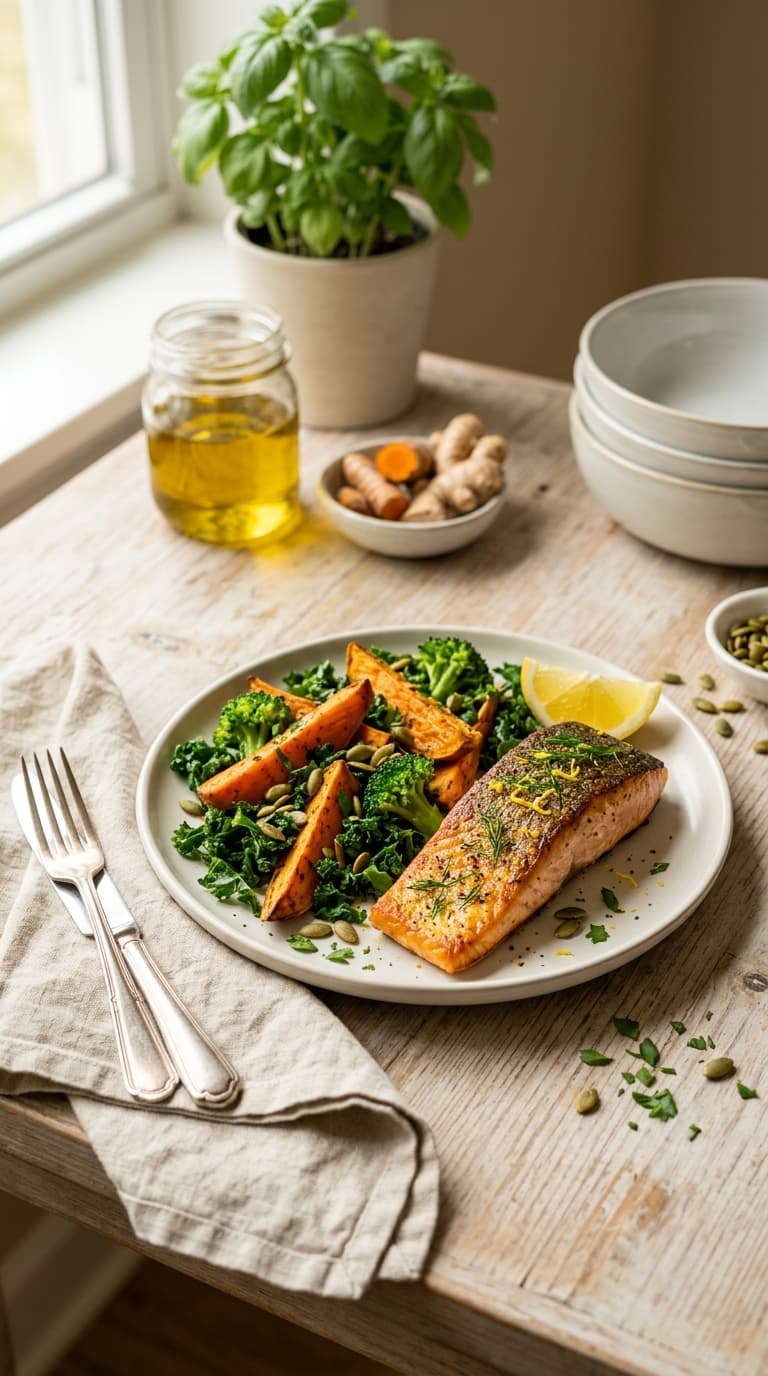
Baked salmon with roasted sweet potato and steamed broccoli. Season the salmon with garlic, lemon zest, and fresh dill. Roast the sweet potato with olive oil and a dash of cinnamon. Easy, fast, and loaded with omega-3s and antioxidants.
Day 2 — Build the Momentum
Breakfast
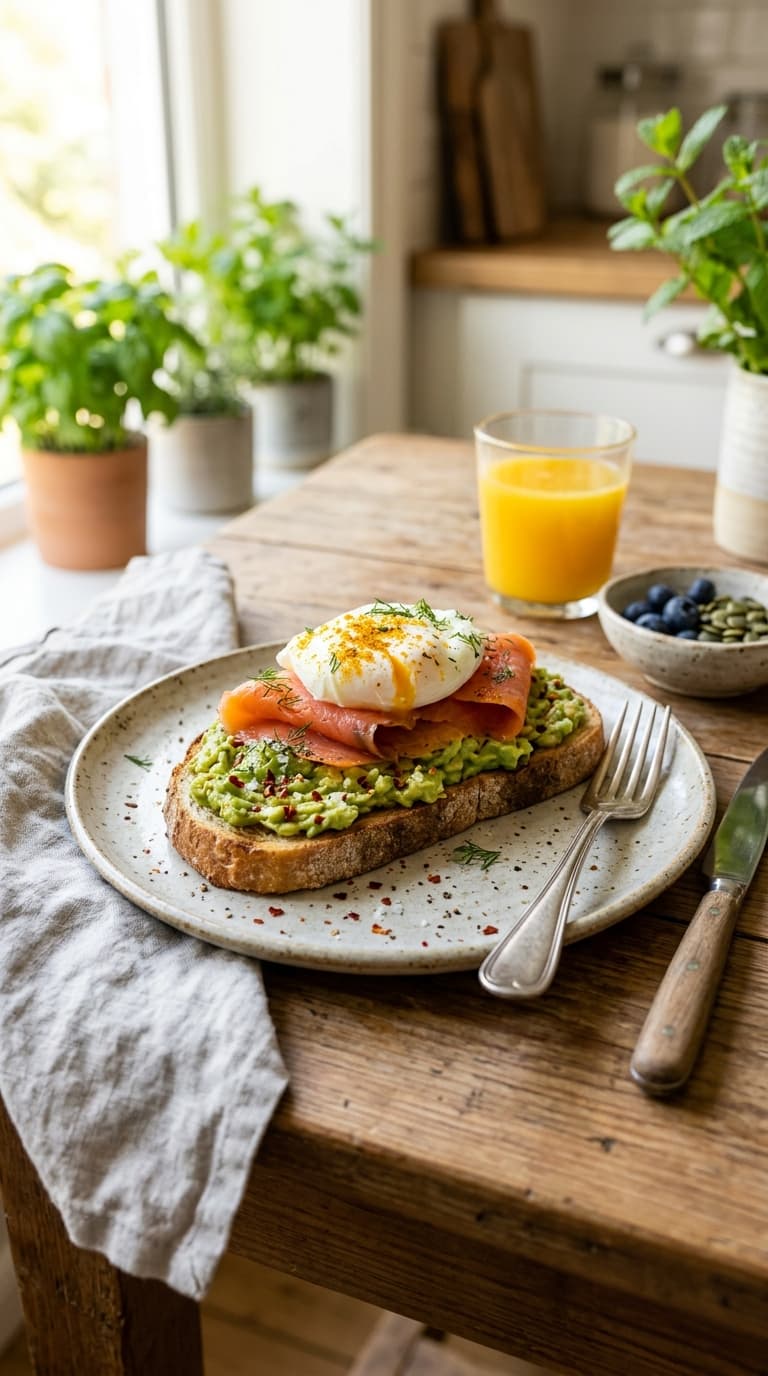
Avocado and smoked salmon on gluten-free toast. Top with capers, red onion, and a squeeze of lemon. This one feels fancy but takes about 8 minutes. You’re welcome.
Lunch
Lentil and kale soup with garlic, ginger, turmeric, cumin, and a squeeze of lime. Make a big batch — you’ll thank yourself later in the week.
Dinner
Chicken thighs slow-roasted with garlic, olives, artichokes, and lemon over a bed of cauliflower rice. This is genuinely one of my favorite meals on this whole plan. The olives give it a briny depth that makes you forget you’re “eating healthy.”
Day 3 — Midweek Flavor Boost
Breakfast
Chia pudding made the night before with coconut milk, chia seeds, a little maple syrup, and vanilla. Top with mango chunks and a sprinkle of hemp seeds. It’s creamy, satisfying, and requires zero effort in the morning — which, honestly, is always the goal.
Lunch
Sardine and white bean salad with arugula, red onion, lemon juice, and olive oil. Sardines get a bad reputation, but they’re one of the most powerful anti-inflammatory foods you can eat. Give them a fair shot.
Dinner
Beef and vegetable stew using sweet potato, carrots, parsnips, mushrooms, and bone broth. Season generously with thyme, rosemary, and black pepper. Serve with a slice of sourdough bread (yes, sourdough is generally fine here — the fermentation process makes it easier on digestion).
Day 4 — Halfway There, Keep Going
Breakfast
Green smoothie bowl blended with spinach, frozen mango, banana, and coconut water. Top with granola, sliced kiwi, and a drizzle of almond butter. Colorful, energizing, and it looks like something you’d pay $14 for at a café :/
Lunch
Leftover lentil soup from Day 2 (told you it would come in handy) with a side of sliced avocado and gluten-free crackers.
Dinner
Seared tuna steaks with a sesame-ginger crust, served with steamed bok choy and brown rice. Toss the bok choy in garlic and coconut aminos (a nightshade-free, soy-sauce alternative that’s genuinely delicious).
Day 5 — Friday Energy, Real Talk
Breakfast
Sweet potato and spinach breakfast hash cooked in olive oil with onion, garlic, and cumin. Top with a couple of fried eggs if you eat them. This is savory breakfast done right, and it keeps you full for hours.
Lunch
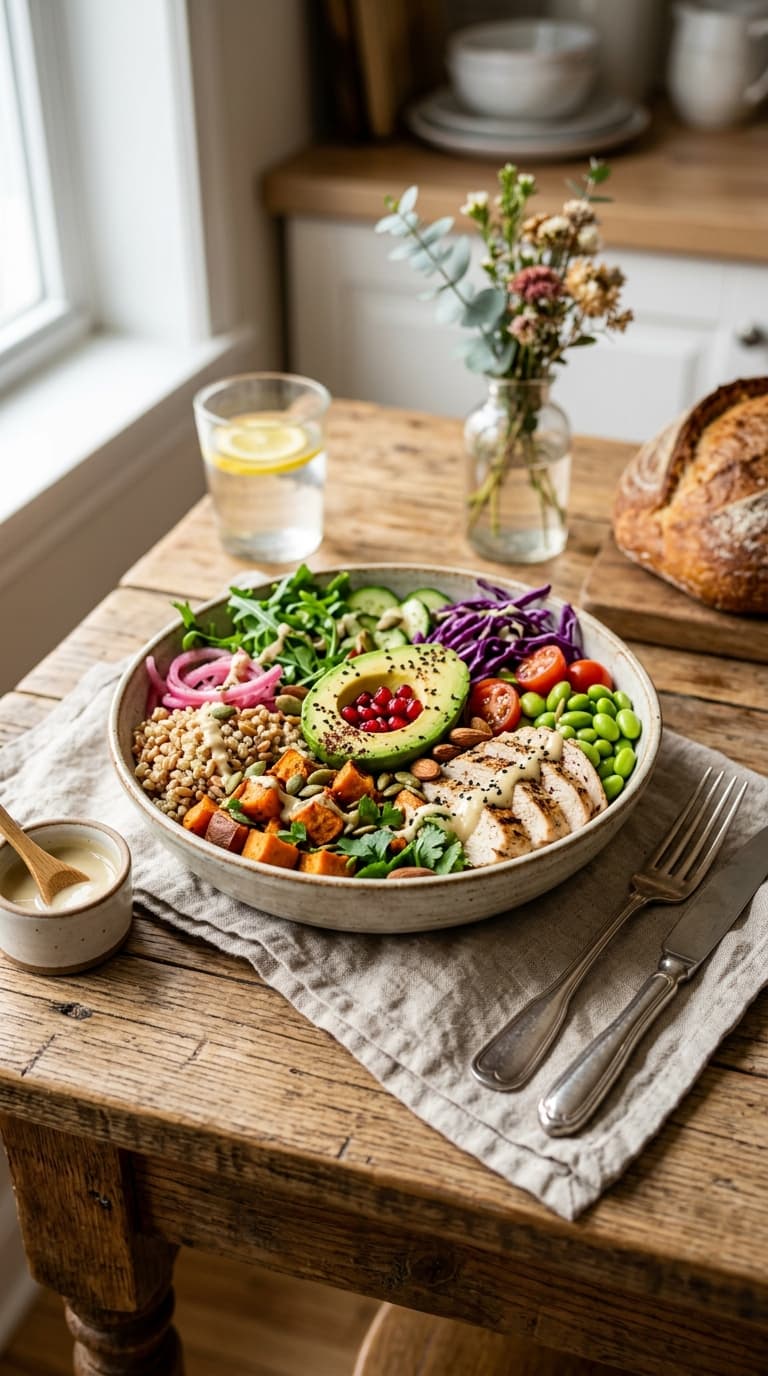
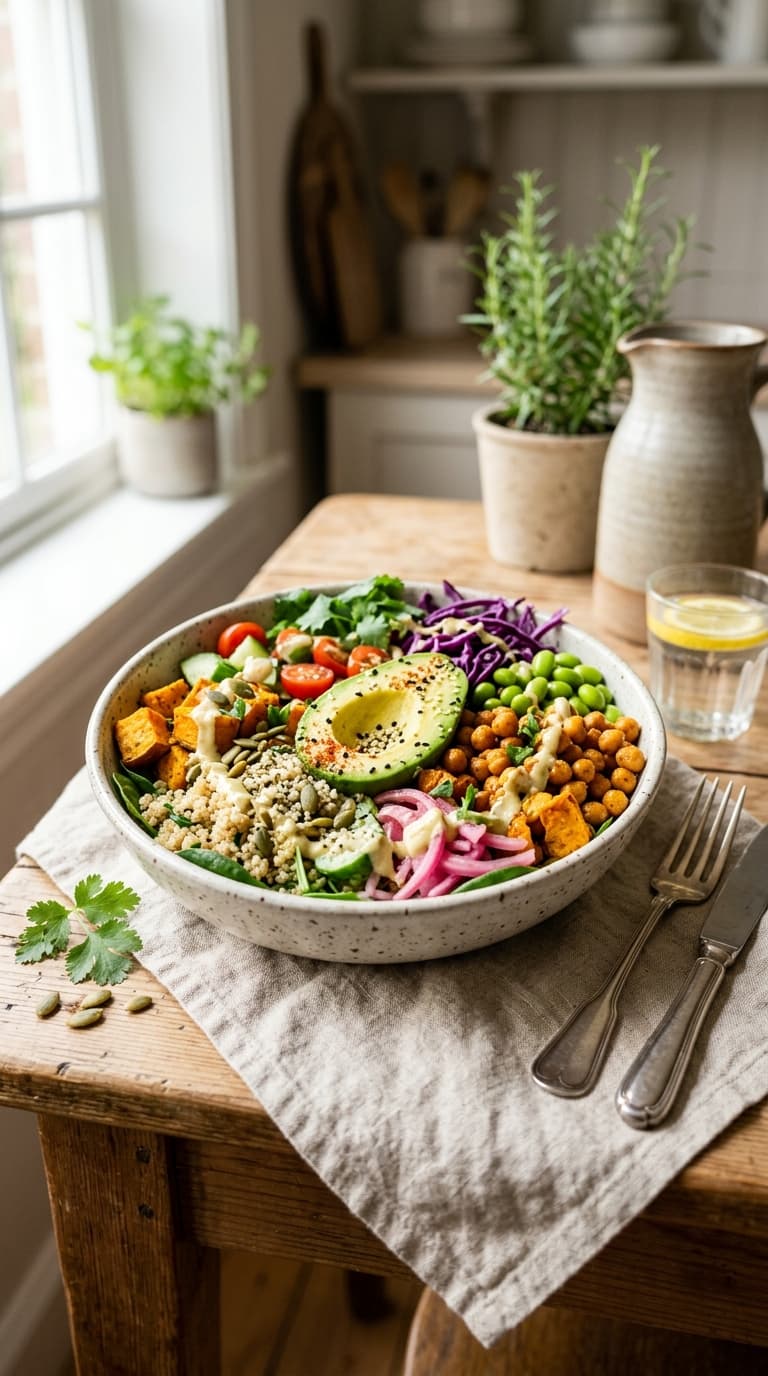
Buddha bowl with brown rice, roasted beets, shredded purple cabbage, sliced avocado, edamame, and a tahini-lemon dressing. The color alone makes this feel celebratory.
Dinner
Herb-crusted lamb chops with roasted carrots and a mint-yogurt sauce (use coconut yogurt to keep it dairy-free if needed). Lamb is naturally rich in zinc and omega-3 fatty acids, both of which support a balanced inflammatory response.
Day 6 — Weekend Mode
Breakfast
Time to be a little extra. Make buckwheat pancakes with coconut milk, a pinch of cinnamon, and vanilla. Top with fresh cherries and a drizzle of honey. Cherries are one of the most underrated anti-inflammatory fruits out there — they’re loaded with anthocyanins that help reduce joint pain.
While you’re cooking, brew yourself something special. These herbal tea blends for relaxation and sleep are perfect for a slow Saturday morning — chamomile or passionflower pairs beautifully with a stack of warm pancakes.
Lunch
Grilled mackerel tacos in lettuce wraps with shredded cabbage, mango salsa (mango, cucumber, red onion, lime, cilantro), and avocado crema. FYI, using lettuce as a wrap instead of tortillas isn’t a sacrifice — it’s genuinely refreshing.
Dinner
Coconut curry with chickpeas, spinach, and sweet potato. Use full-fat coconut milk, fresh ginger, garlic, turmeric, cumin, and coriander. Serve over jasmine rice. This is one of those meals that makes everyone in your household forget they’re eating an anti-inflammatory, nightshade-free dinner. It’s just straight-up delicious.
Day 7 — Finish Strong
Breakfast
Overnight oats with almond milk, chia seeds, sliced strawberries, and a tablespoon of almond butter. Prepped the night before, eaten in five minutes. Perfect Sunday fuel.
Lunch
Wild salmon patties (canned salmon works great here) mixed with almond flour, garlic, dill, and lemon zest. Pan-fry in olive oil and serve with a big green salad and avocado dressing.
Dinner
Slow cooker chicken and vegetable stew with parsnips, celery, carrots, garlic, bone broth, and fresh herbs. This is comfort food that actually heals — the bone broth alone delivers collagen and glycine, both of which support gut lining and reduce systemic inflammation. End the week on a high note.
Key Anti-Inflammatory Ingredients to Keep Stocked
Let’s make this practical. Here are the non-negotiables for this meal plan:
- Turmeric + black pepper (black pepper increases curcumin absorption by up to 2,000%)
- Fresh ginger (anti-inflammatory, digestive support, immune booster)
- Extra virgin olive oil (oleocanthal has similar effects to ibuprofen — seriously)
- Fatty fish (salmon, sardines, mackerel — aim for 3–4 servings a week)
- Leafy greens (buy in bulk, use constantly)
- Sweet potatoes (your nightshade-free potato replacement and they taste better anyway)
- Coconut aminos (soy sauce substitute, nightshade-free, slightly sweet)
- Bone broth (gut healing, collagen, anti-inflammatory amino acids)
Drinks That Work With This Plan
Don’t overlook what you’re drinking. Sugary drinks and alcohol actively promote inflammation, so what you sip matters as much as what you eat.
Green tea, ginger tea, and turmeric-based drinks are your best friends here. If you want to level up your beverage game, check out these detox tea recipes you can make at home — several of them are nightshade-free and genuinely support inflammation reduction.
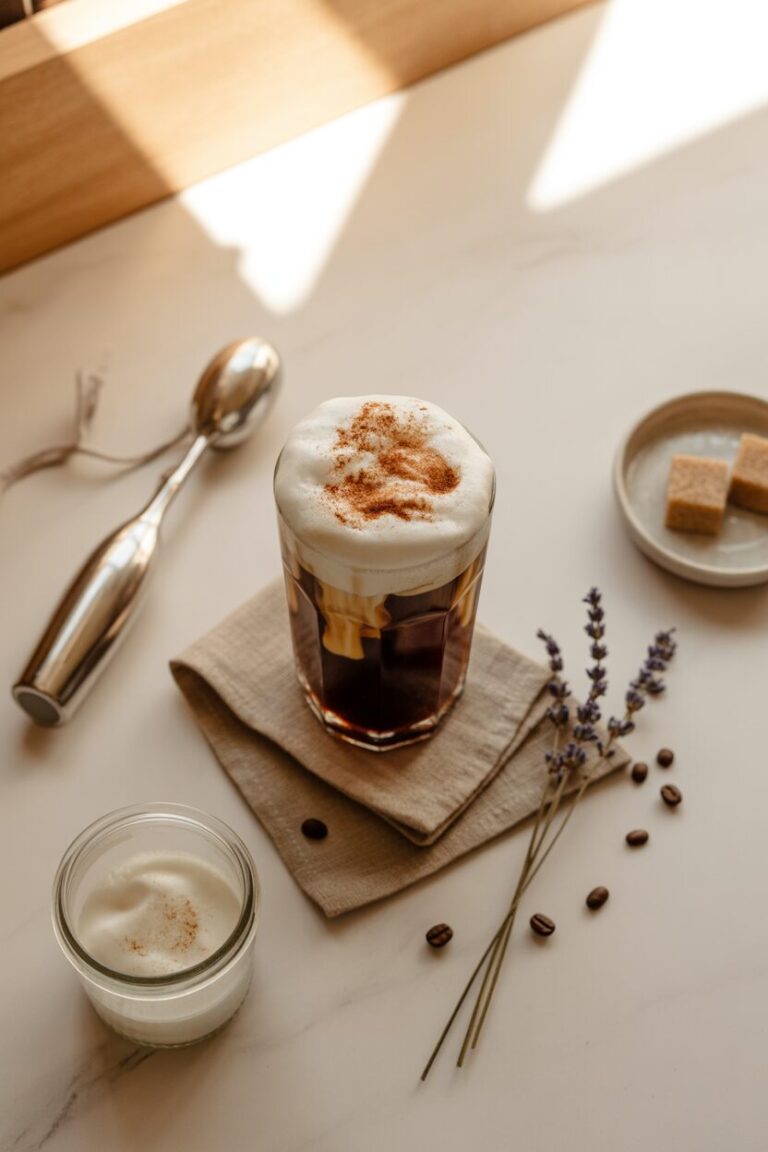
For a morning boost that doesn’t spike your blood sugar, you might also love healthy coffee recipes with nut milks and natural sweeteners — golden milk lattes and almond milk brews are a natural fit for this lifestyle.
Quick Tips for Making This Week Actually Work
- Batch cook on Sunday. Make a big pot of grains (quinoa, brown rice), roast a sheet pan of vegetables, and prep at least one protein. This saves you from 6pm decision fatigue.
- Read every label. Paprika and cayenne (both nightshades) hide in spice blends, sauces, and seasoning mixes. Don’t get caught out.
- Keep frozen fish on hand. Frozen wild salmon and sardines are affordable, convenient, and just as nutritious as fresh.
- Don’t fear fats. Avocado, olive oil, coconut oil — these are your anti-inflammatory allies. Don’t swap them for low-fat alternatives.
- Diversify your greens. Don’t just eat spinach every day. Rotate between kale, arugula, bok choy, Swiss chard, and watercress for a broader range of nutrients.
Wrapping It Up
Seven days isn’t a long time, but it’s enough to start feeling the difference. Less bloating, clearer skin, more stable energy, and joints that aren’t screaming at you by Thursday — that’s what a consistent anti-inflammatory, nightshade-free week can actually deliver.
The real win here isn’t just the one week though. It’s building familiarity with a new set of ingredients and rhythms that you can carry forward. Once you nail turmeric salmon and coconut chickpea curry, those meals become weeknight staples, not “health food experiments.”
Give this plan a full seven days. Take notes on how you feel. Adjust what doesn’t work for you. And if sweet potato replaces white potato permanently in your kitchen? Honestly, that’s just a W all around.