7 Day Anti-Inflammatory Meal Plan for Fibromyalgia
7 Day Anti-Inflammatory Meal Plan for Fibromyalgia
If you’re living with fibromyalgia, you already know the drill — you wake up hoping today will be a good day, and your body has other plans. The fatigue, the widespread pain, the brain fog that makes you feel like you’re thinking through wet concrete. Sound familiar? Yeah, it’s a lot.
Here’s something worth knowing though: what you eat genuinely matters when it comes to managing fibromyalgia symptoms. An anti-inflammatory diet won’t magically cure everything (I wish!), but it can seriously take the edge off. IMO, food is one of the most underrated tools in the fibromyalgia management toolkit.
I’ve spent a lot of time researching and experimenting with anti-inflammatory eating — partly out of curiosity, partly because watching someone you care about struggle with chronic pain makes you want to do something useful. This 7-day meal plan is the result of all that exploration. Let’s get into it.
Why Inflammation Matters for Fibromyalgia
Fibromyalgia is complicated. It’s not a straightforward inflammatory disease like rheumatoid arthritis, but research increasingly suggests that low-grade systemic inflammation plays a role in amplifying pain signals and worsening symptoms.
When your body is in a constant state of low-level inflammation, your nervous system — already hypersensitive in fibromyalgia — gets even more reactive. More pain, more fatigue, more everything-is-awful. Reducing inflammatory triggers through food can help calm that cycle down.
The goal isn’t perfection. The goal is giving your body fewer reasons to be angry at you. 🙂
Foods to Embrace (and Avoid)
Before we jump into the meal plan, let’s get clear on what we’re working with.
The Good Stuff — Anti-Inflammatory Foods
- Fatty fish (salmon, sardines, mackerel) — rich in omega-3 fatty acids
- Leafy greens (spinach, kale, arugula) — packed with antioxidants
- Berries (blueberries, strawberries, cherries) — potent anti-inflammatory compounds
- Olive oil — oleocanthal has similar effects to ibuprofen in some studies
- Turmeric and ginger — classic inflammation fighters
- Nuts and seeds (walnuts, flaxseeds, chia seeds) — healthy fats and minerals
- Whole grains (quinoa, brown rice, oats) — fiber helps regulate inflammatory markers
- Legumes (lentils, chickpeas, black beans) — protein, fiber, and anti-inflammatory polyphenols
- Green tea — loaded with catechins that reduce oxidative stress
Speaking of green tea, if you want to get more out of your daily cup, check out these anti-inflammatory tea blends for better health — some of these are genuinely impressive for daily inflammation management.
The Not-So-Good Stuff — Foods to Limit
- Refined sugar — one of the biggest inflammation drivers
- Processed and ultra-processed foods — additives, seed oils, and preservatives
- White flour and refined carbs — spike blood sugar and promote inflammation
- Alcohol — disrupts sleep and triggers inflammatory responses
- Trans fats — still hiding in some packaged foods
- Excessive red meat — especially processed meats like sausage and deli cuts
- Nightshade vegetables (for some people) — tomatoes, peppers, eggplant may worsen symptoms in sensitive individuals
The 7-Day Anti-Inflammatory Meal Plan
Day 1 — Start Strong
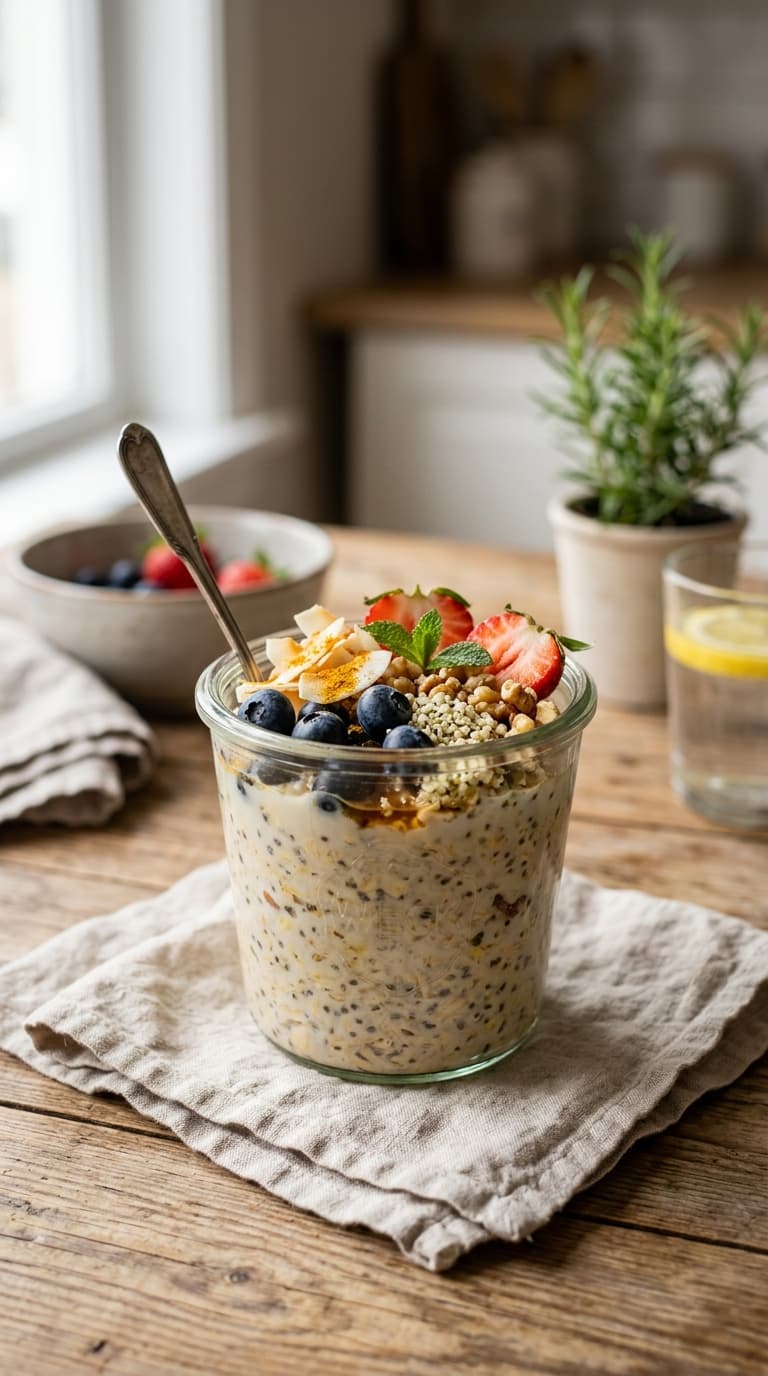
Breakfast: Overnight oats with blueberries, chia seeds, and a drizzle of honey. Prep it the night before so morning-you doesn’t have to think too hard. The chia seeds add omega-3s and keep you full for hours.
Lunch: Large spinach salad with canned wild salmon, avocado, cucumber, and a lemon-olive oil dressing. Simple, fast, and genuinely delicious.
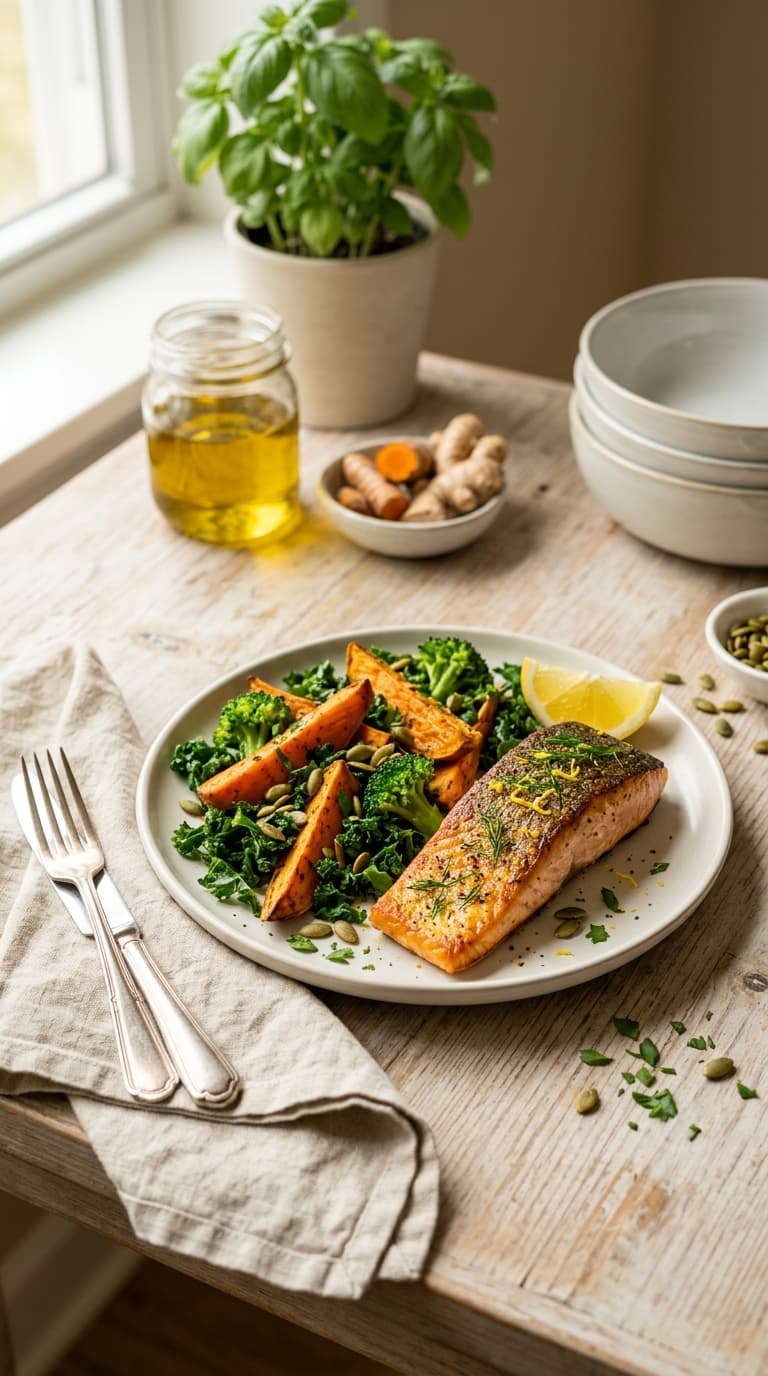
Dinner: Baked turmeric salmon with roasted sweet potato and steamed broccoli. The turmeric marinade (turmeric, garlic, olive oil, black pepper) does most of the heavy lifting here. Black pepper is important — it activates the curcumin in turmeric by up to 2000%.
Snack: A small handful of walnuts and a cup of ginger tea.
Day 2 — Lean Into Legumes
Breakfast: Smoothie with spinach, frozen mango, banana, flaxseeds, and coconut milk. Blend it up and you’ve got an anti-inflammatory powerhouse in a glass.
Lunch: Lentil and vegetable soup with crusty whole grain bread. Make a big batch — you’ll thank yourself on Day 3.
Dinner: Chickpea and kale stir-fry with brown rice, seasoned with cumin, coriander, and a squeeze of lemon. Chickpeas are one of those underrated foods that hit protein, fiber, and anti-inflammatory polyphenols all at once.
Snack: Apple slices with almond butter.
Day 3 — Midweek Reset
Breakfast: Two scrambled eggs with sautéed spinach and a slice of whole grain toast. Eggs get a bad rap sometimes, but they’re a solid source of choline, which supports brain function — and fibro brain fog is real.
Lunch: Leftover lentil soup (told you!) with a side of sliced avocado.
Dinner: Grilled sardines or mackerel with a Mediterranean-style salad — olives, cucumber, tomato (if you tolerate nightshades), red onion, and a generous drizzle of extra virgin olive oil.
Snack: A small bowl of mixed berries with a sprinkle of hemp seeds.
Day 4 — Fiber Forward
Breakfast: Quinoa porridge with almond milk, cinnamon, sliced banana, and a tablespoon of flaxseeds. Quinoa is a complete protein, which is rare for a grain — it’s doing serious work here.
Lunch: Black bean and roasted vegetable wrap in a whole wheat tortilla with hummus, spinach, and sliced avocado.
Dinner: Turkey and vegetable stir-fry with brown rice and a ginger-garlic sauce. Turkey is a leaner choice than red meat and still gives you that satisfying dinner feel.
Snack: Green tea and a few squares of dark chocolate (70% or higher). Yes, dark chocolate counts as anti-inflammatory. You’re welcome. 🙂
If you’re looking for ways to make your green tea ritual more intentional, these tips for making tea time more mindful are worth a read — a calmer mind genuinely helps with pain perception.
Day 5 — Plant-Powered Day
Breakfast: Chia pudding made with almond milk and topped with sliced mango, shredded coconut, and a drizzle of maple syrup. Prep it overnight — it takes literally 5 minutes.
Lunch: Roasted beet and walnut salad on a bed of arugula with goat cheese and balsamic vinaigrette. Beets contain betalains, which are powerful anti-inflammatory and antioxidant compounds.
Dinner: Creamy turmeric lentil dal with brown rice and steamed green beans. This dish is warming, comforting, and loaded with inflammation-fighting spices.
Snack: Celery sticks with almond butter and a cup of herbal tea to support digestion.
Day 6 — Comfort Without the Cost
Breakfast: Oatmeal with walnuts, cinnamon, and fresh strawberries. Keep it warm, keep it cozy. Oats contain beta-glucan, a type of soluble fiber that helps reduce inflammatory markers in the gut.
Lunch: Grilled chicken and avocado salad with mixed greens, pumpkin seeds, and a tahini dressing.
Dinner: Baked cod with roasted asparagus and a side of quinoa. Cod is a mild, easy-to-digest white fish — perfect for days when your gut is feeling sensitive.
Snack: A smoothie with frozen cherries, spinach, banana, and a teaspoon of flaxseed oil. Cherries are one of the best natural sources of anti-inflammatory anthocyanins — some research suggests they’re particularly helpful for pain and sleep quality.
Day 7 — Finish Strong
Breakfast: Smashed avocado on whole grain toast with a poached egg and a sprinkle of chili flakes. Classic for a reason. Add a side of fresh fruit and you’re sorted.
Lunch: Loaded sweet potato with black beans, corn, salsa, Greek yogurt (in place of sour cream), and fresh cilantro. Filling, colorful, and completely plant-forward.
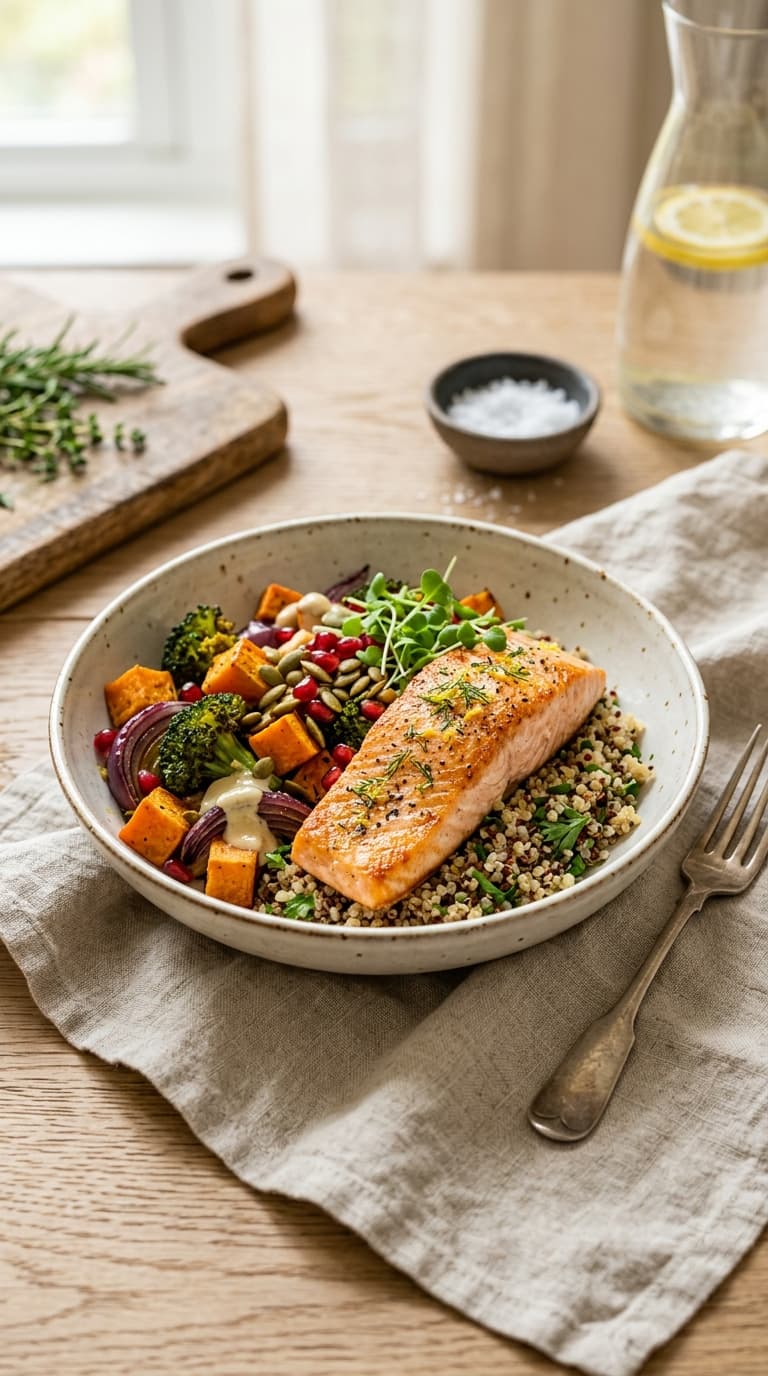
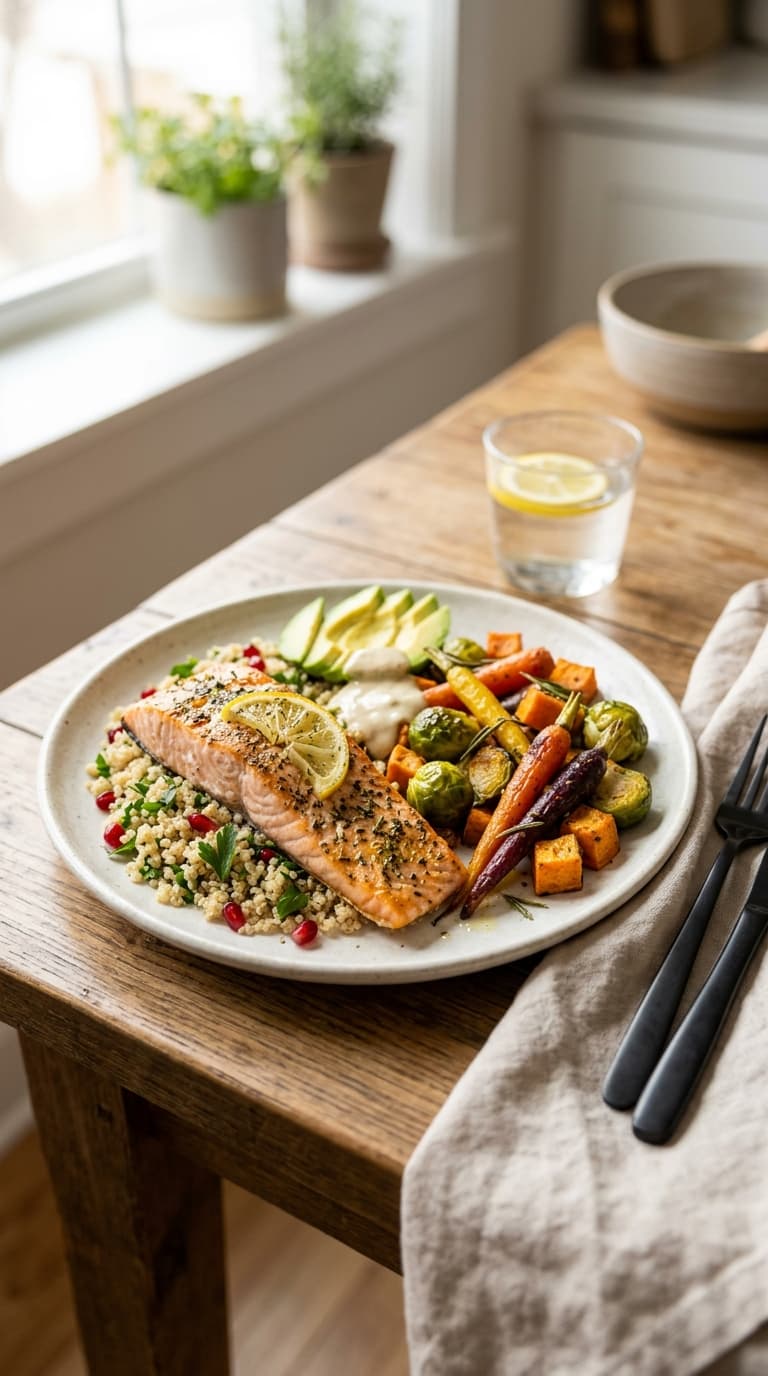
Dinner: Herb-crusted salmon with garlic roasted zucchini and a side of farro. Farro is a nutty, chewy ancient grain that’s higher in fiber and protein than white rice. End your week the same way you started it — with omega-3-rich salmon.
Snack: A cup of chamomile or lavender tea before bed. Sleep is crucial for fibromyalgia management, and a calming tea ritual genuinely helps. You’ll find some excellent options in this list of herbal teas that help you sleep better.
Tips for Making This Plan Work in Real Life
Look, meal plans are great on paper. Real life is messier. Here’s how to actually stick with this approach when your energy is low and cooking feels impossible:
- Batch cook on good days. When you feel halfway decent, cook double portions of grains, legumes, and soups. Future-you will be grateful.
- Keep a well-stocked pantry. Canned beans, canned salmon, olive oil, whole grains, nuts, and frozen berries mean you can pull together an anti-inflammatory meal even on difficult days.
- Don’t obsess over perfection. One “off” meal doesn’t undo a week of good eating. FYI, the stress of being too rigid about food can actually make inflammation worse — so give yourself grace.
- Stay hydrated. Dehydration worsens fatigue and cognitive symptoms. Aim for water, herbal teas, and broths throughout the day.
- Watch your caffeine intake. A morning coffee is fine for most people, but excessive caffeine can disrupt sleep — and poor sleep is one of the biggest fibromyalgia triggers. If you want to keep your coffee habit feeling good, try switching to lower-calorie coffee drinks that don’t rely on sugar and cream to taste good.
The Gut-Brain Connection You Shouldn’t Ignore
Here’s something that doesn’t get talked about enough in fibromyalgia circles: your gut health directly impacts your pain levels and mental clarity. The gut-brain axis is a two-way communication system, and when your gut microbiome is out of balance, it can amplify pain signals and worsen mood.
An anti-inflammatory diet naturally supports gut health through fiber, fermented foods, and polyphenols. But you can also be more intentional about it by including:
- Fermented foods like plain Greek yogurt, kefir, kimchi, and sauerkraut
- Prebiotic-rich foods like garlic, onions, leeks, asparagus, and bananas
- Bone broth for gut lining support
And yes, your morning cup of herbal tea for digestion actually contributes here too. Small habits stack up.
A Word on Supplements
This article is about food, not supplements, but it would be weird to talk about fibromyalgia and inflammation without at least mentioning a few evidence-backed options worth discussing with your doctor:
- Magnesium — frequently deficient in fibromyalgia patients; involved in muscle and nerve function
- Vitamin D — low levels correlate with increased pain sensitivity
- Omega-3 fish oil — if you’re not eating fatty fish regularly
- Curcumin (from turmeric) — the concentrated supplement form shows promising anti-inflammatory effects
Always run supplements past your healthcare provider, especially if you’re on medications. Not everything plays nicely together.
Wrapping It All Up
Living with fibromyalgia means constantly looking for ways to feel even a little bit better. An anti-inflammatory diet isn’t a cure — but it’s one of the most accessible, empowering tools you have. You eat every single day anyway. You might as well make those meals work for you instead of against you.
This 7-day plan gives you a solid framework to start from. Salmon on Monday, legumes on Tuesday, plants on Friday — mix it up, find the meals you actually enjoy, and build from there. The goal is a sustainable lifestyle shift, not a temporary detox that you abandon by day four (we’ve all been there :/).
Your body is dealing with enough. Feed it kindly, hydrate consistently, rest when you need to, and give yourself credit for the effort you’re putting in. That matters more than any single perfect meal ever could.
Now go make that overnight oats — your morning self deserves a head start.