23 Anti-Inflammatory Overnight Oats Recipes
23 Anti-Inflammatory Overnight Oats Recipes That’ll Change Your Morning Routine
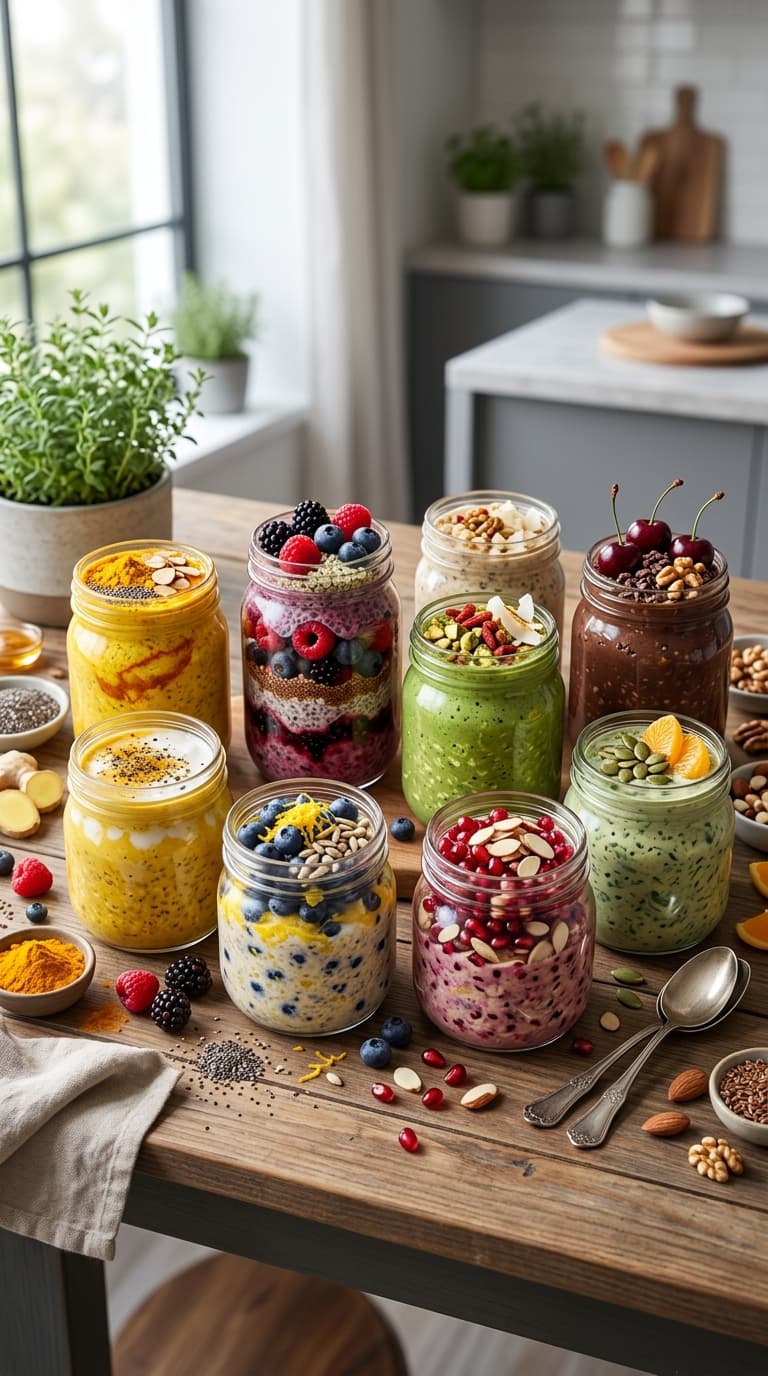
Mornings are hard enough without waking up to inflammation, brain fog, and a body that feels like it ran a marathon in its sleep. If you’re someone who’s been dealing with joint pain, bloating, or just that general “bleh” feeling, your breakfast might be the easiest place to start making changes. And honestly? Overnight oats might just be the unsung hero your body has been begging for.
I stumbled onto anti-inflammatory overnight oats during a particularly rough patch where my knees were aching and my energy was basically nonexistent. A friend suggested I swap my sad desk-breakfast for something actually nourishing, and here we are. Spoiler: it worked better than I expected 🙂
Why Overnight Oats Are a Game-Changer for Inflammation
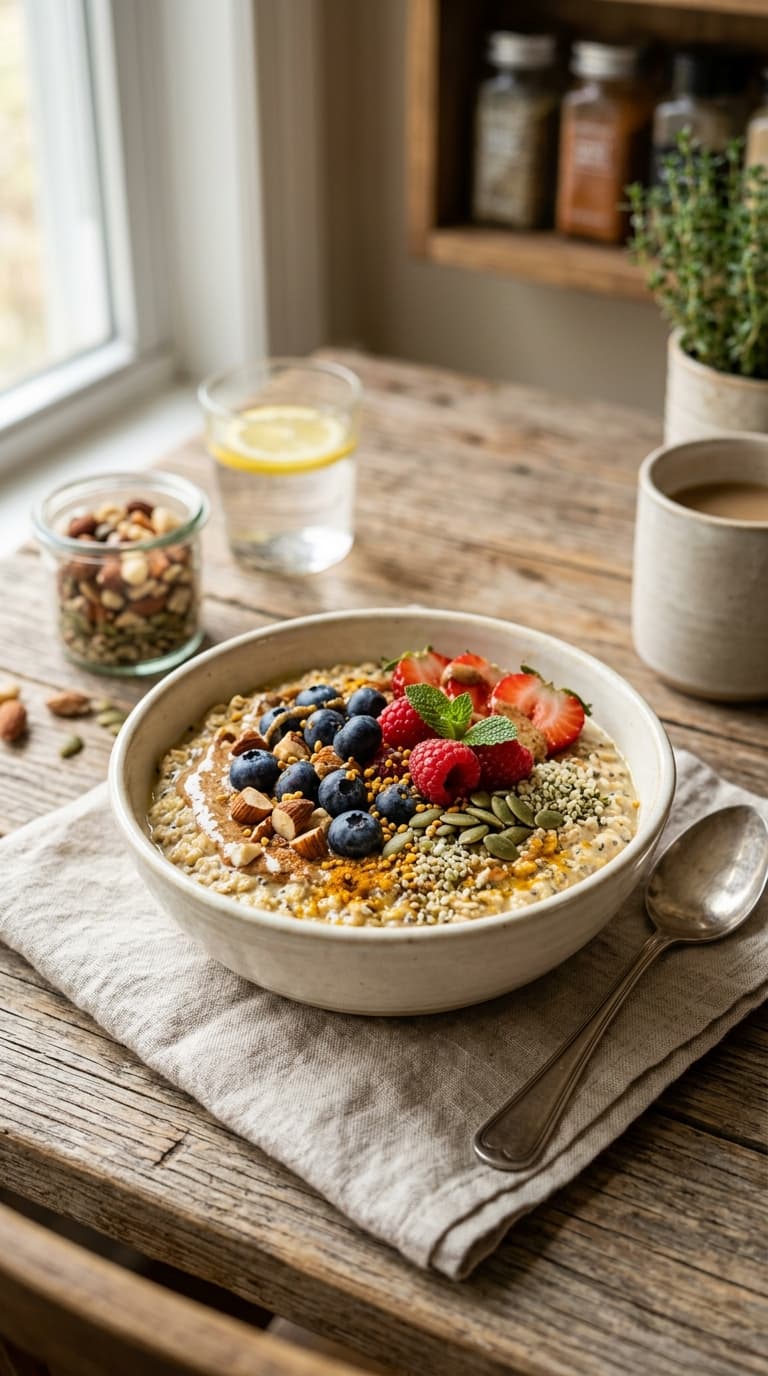
Before we get into the recipes, let’s talk about why overnight oats specifically hit differently when it comes to fighting inflammation.
When you soak oats overnight, something called beta-glucan — a powerful soluble fiber — becomes more bioavailable. That means your body absorbs it more efficiently and it gets to work faster, helping to regulate your immune response and lower inflammatory markers. Add the right toppings, and you’ve basically built a tiny pharmacy in a jar.
Rolled oats also contain avenanthramides, antioxidants unique to oats that have been shown to reduce inflammation in blood vessels. So yeah, these aren’t just “healthy carbs.” They’re genuinely functional food.
The Anti-Inflammatory Pantry Staples You’ll Need
Most of these recipes use the same core ingredients. Stock these up once and you’re set for weeks:
- Rolled oats (not instant — always go rolled or steel-cut)
- Chia seeds — omega-3 powerhouses
- Turmeric — the golden MVP of anti-inflammatory cooking
- Ginger — both fresh and powdered work great
- Cinnamon — regulates blood sugar AND reduces inflammation
- Berries — blueberries, cherries, raspberries
- Walnuts and almonds — healthy fats that fight inflammation
- Flaxseeds — another omega-3 winner
- Unsweetened almond milk or oat milk
- Honey or maple syrup for sweetness (skip refined sugar entirely)
If you’re already into wellness drinks like anti-inflammatory tea blends, you’ll recognize a lot of these ingredients. The kitchen strategy is surprisingly similar.
The Base Recipe (Start Here Every Time)
Every recipe below builds on this foundation. Get this right and everything else is just flavor variations.
Base ingredients per jar:
- ½ cup rolled oats
- ¾ cup unsweetened almond milk (or oat milk)
- 1 tablespoon chia seeds
- ½ teaspoon cinnamon
- 1 teaspoon maple syrup or honey
- Pinch of sea salt
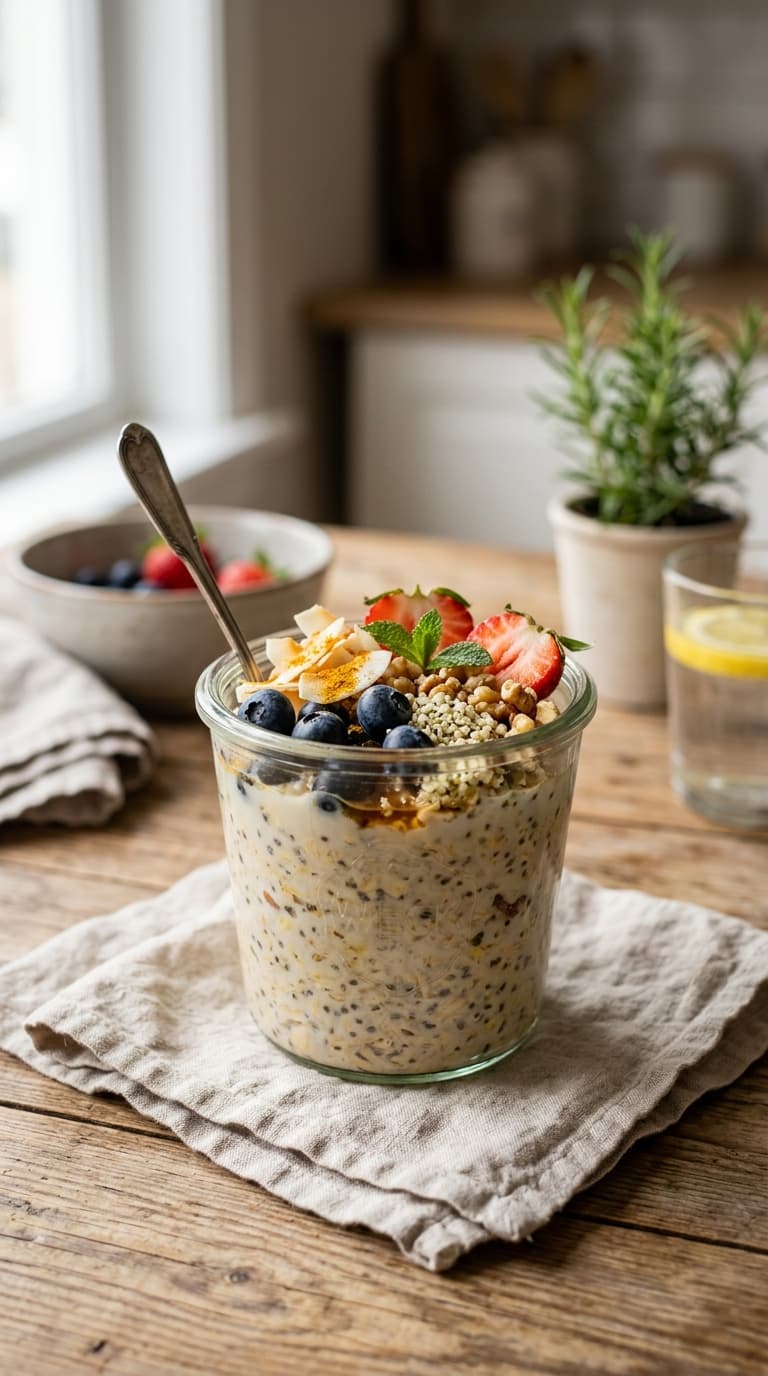
Mix everything in a mason jar, seal it, shake it, and refrigerate overnight. That’s genuinely it. The next morning, add your toppings and eat. I don’t know why it took me so long to start doing this.
23 Anti-Inflammatory Overnight Oats Recipes
1. Golden Turmeric and Mango Oats
This one looks like sunshine in a jar, and it tastes even better. Turmeric is arguably the most studied anti-inflammatory spice on the planet, and pairing it with mango’s natural vitamin C actually boosts curcumin absorption. Add ½ teaspoon turmeric, ¼ teaspoon black pepper (crucial — it enhances absorption by up to 2000%), and top with fresh or frozen mango chunks.
2. Blueberry and Flaxseed Power Oats
Blueberries are loaded with anthocyanins, which are potent antioxidants that directly reduce oxidative stress. Add 1 tablespoon ground flaxseed to your base, then top with a generous handful of fresh blueberries and a drizzle of honey. Simple, gorgeous, effective.
3. Cherry and Dark Chocolate Oats
Tart cherries are one of nature’s best anti-inflammatory foods — they’ve been used to reduce gout flare-ups and muscle soreness for years. Mix in 1 tablespoon of cacao powder (not cocoa powder — raw cacao has more antioxidants) and top with tart cherry compote or frozen sour cherries. Add a few dark chocolate chips if you want to live a little.
4. Ginger Pear and Walnut Oats
Fresh ginger contains gingerols and shogaols, compounds that block inflammatory pathways similarly to ibuprofen — minus the stomach issues. Grate about ½ teaspoon of fresh ginger into your base, then top with diced pear and crushed walnuts. The texture here is genuinely incredible.
5. Raspberry and Hemp Seed Oats
Hemp seeds deliver a perfect 3:1 ratio of omega-6 to omega-3 fatty acids, which is exactly what you want for keeping inflammation in check. Add 2 tablespoons of hemp hearts to your base, top with raspberries, and finish with a tiny squeeze of lemon juice. FYI, this one is also ridiculously pretty if you care about your Instagram feed.
6. Cinnamon Apple and Almond Butter Oats
This is the one I make most often. Apples contain quercetin, a flavonoid with serious anti-inflammatory properties, and almond butter brings healthy fats and vitamin E. Dice half an apple and stir it right into the base before refrigerating. Top with a big spoonful of almond butter in the morning.
7. Pineapple and Coconut Anti-Inflammatory Oats
Pineapple contains bromelain, an enzyme that reduces swelling and inflammation, especially post-workout. Use coconut milk instead of almond milk in your base, then top with fresh pineapple chunks and unsweetened shredded coconut. This one genuinely tastes like a tropical vacation, which we all deserve.
8. Matcha Green Tea and Banana Oats
Matcha is packed with EGCG (epigallocatechin gallate), one of the most researched anti-inflammatory compounds out there. Add 1 teaspoon of ceremonial-grade matcha to your base, then top with sliced banana and a sprinkle of hemp seeds. The banana naturally sweetens everything so you barely need any added sweetener.
9. Beetroot and Berry Blast Oats
Beets contain betalains, pigments with impressive anti-inflammatory and antioxidant effects. Stir 1 tablespoon of beet powder into your base, add mixed berries on top, and prepare yourself for a jar that looks almost too pretty to eat. Almost.
10. Avocado and Lime Savory Oats
Wait — savory overnight oats? Hear me out. Avocados are loaded with oleocanthal, a compound that works like a natural anti-inflammatory. Skip the maple syrup in your base, add a pinch of cumin instead, and top with sliced avocado, a squeeze of lime, and pumpkin seeds. It sounds weird until you try it, and then you’ll wonder why you ever made anything else.
11. Walnut Brownie Oats
This one tricks your brain into thinking you’re eating dessert. Walnuts are one of the richest plant sources of omega-3 fatty acids, which directly reduce inflammatory cytokines. Mix 1 tablespoon cacao powder and ½ teaspoon vanilla extract into your base, then top with crushed walnuts and a few cacao nibs.
12. Strawberry Basil and Balsamic Oats
Strawberries contain fisetin and anthocyanins, both of which reduce inflammatory markers. The basil adds extra antioxidants, and a tiny drizzle of balsamic vinegar ties it together surprisingly well. This one sounds fancy but takes about three minutes.
13. Turmeric Carrot Cake Oats
Carrots are rich in beta-carotene, which converts to vitamin A and supports immune function. Add ¼ cup grated carrot, ½ teaspoon turmeric, ½ teaspoon cinnamon, and a pinch of nutmeg to your base. Top with raisins and crushed pecans. It tastes exactly like carrot cake and you’ll feel zero guilt about it.
14. Pomegranate and Pistachio Oats
Pomegranate arils are bursting with punicalagins and punicic acid, both potent anti-inflammatory compounds. They’re also arguably the most satisfying texture of any oat topping. Add pistachios for healthy fats and a pop of green, then finish with a drizzle of pomegranate molasses if you can find it.
15. Blackberry Lemon and Chia Oats
Blackberries are seriously underrated. They contain anthocyanins, vitamin C, and manganese, all working together to reduce oxidative stress. Add extra chia seeds (up to 2 tablespoons), top with blackberries and lemon zest, and you’ve got one of the most nutrient-dense jars on this list.
16. Spiced Pumpkin Oats
Pumpkin is rich in vitamin C, beta-carotene, and zinc — a triple threat for immune support and inflammation reduction. Stir 3 tablespoons of pure pumpkin purée into your base along with ½ teaspoon pumpkin spice. Top with pepitas and a drizzle of maple syrup. Perfect for fall mornings, but honestly great year-round.
17. Açaí and Almond Oats
Açaí berries pack an extraordinary amount of antioxidants, more than almost any other fruit. Use 2 tablespoons of unsweetened açaí powder or blend in a small pack of frozen açaí. Top with sliced almonds and a few fresh blueberries. This one has a deep purple color that feels almost dramatic.
18. Kiwi and Spinach Green Oats
Spinach contains kaempferol, a flavonoid that research links to reduced inflammatory enzyme activity. Blend a small handful of spinach into your milk before mixing the base (you won’t taste it, I promise). Top with sliced kiwi and a tablespoon of pumpkin seeds. This is honestly one of the most nutritionally complete jars on this list.
19. Miso and Sesame Savory Oats
Miso contains probiotics that support gut health, and a healthy gut is directly linked to lower systemic inflammation. Add ½ teaspoon white miso paste to your base in place of sweetener, skip the cinnamon, and top with sesame seeds, cucumber slices, and a soft-boiled egg. Sounds odd, works brilliantly :/
20. Fig and Hazelnut Oats
Figs are packed with polyphenols that reduce inflammatory markers, and they’re one of those foods that make everything feel a little more luxurious. Top your base with sliced fresh or dried figs, crushed hazelnuts, and a tiny drizzle of honey. This one IMO is the most “weekend brunch” of the entire list.
21. Lemon Ginger and Flaxseed Oats
The combination of lemon and ginger does a lot of heavy lifting here. Ginger reduces inflammation, lemon supports liver detoxification, and flaxseeds add their omega-3 goodness to the mix. Stir 1 teaspoon of fresh lemon juice, ½ teaspoon grated ginger, and 1 tablespoon ground flax into your base. Top with a bit of lemon zest in the morning.
22. Black Sesame and Date Oats
Black sesame seeds contain sesamin and sesamolin, two compounds with documented anti-inflammatory effects. They also have a rich, nutty depth that regular white sesame seeds just can’t match. Add 1 tablespoon of black sesame paste (tahini-style) to your base, sweeten with a chopped Medjool date, and top with a few more sesame seeds.
23. Cranberry Orange and Walnut Oats
Cranberries are rich in proanthocyanidins that fight inflammation and support urinary tract health. Stir in ½ teaspoon orange zest and a tablespoon of dried (unsweetened) cranberries before refrigerating. Top with walnuts and a fresh orange segment. It tastes festive, bright, and genuinely energizing.
Tips for Making Your Overnight Oats Even More Anti-Inflammatory
A few quick upgrades that make a real difference:
- Always use certified gluten-free oats if you have any sensitivity — regular oats can trigger inflammation in some people
- Add black pepper whenever you use turmeric — the piperine in black pepper dramatically boosts curcumin absorption
- Choose unsweetened milk alternatives — added sugars counteract the anti-inflammatory benefits
- Use fresh or frozen fruit over fruit-flavored syrups — the real thing delivers actual polyphenols
- Prep 3–4 jars at once — they keep in the fridge for up to 5 days and it removes every excuse for skipping breakfast
If you’re building a morning wellness routine around reducing inflammation, pairing these oats with herbal teas that help you sleep better the night before is a combination worth trying. Sleep quality and inflammation are deeply connected, and working both angles makes a noticeable difference.
Also, if you’re curious about other ways to reduce stress through food and drink, there’s a lot of overlap between anti-inflammatory eating and calming your nervous system.
How Long Should You Prep These?
The sweet spot is 8–12 hours of soaking. That’s enough time for the oats to absorb the liquid fully, the chia seeds to gel properly, and all the flavors to meld together. Less than 4 hours and you’ll get underprepared oats with a gritty texture. More than 24 hours and things start getting mushy.
Prep them right before bed, eat them right after waking up. It’s the simplest possible meal prep system.
The Bigger Picture: Food as Medicine
Here’s something worth sitting with: chronic inflammation is at the root of most major diseases — heart disease, type 2 diabetes, autoimmune conditions, and even some cancers. What you eat every single morning either feeds that fire or helps put it out. Overnight oats aren’t a cure, but they’re a daily deposit into your long-term health account.
Pairing breakfast with genuinely functional beverages like detox teas you can make in 10 minutes or herbal teas for better digestion just stacks those benefits further. Think of it as building a morning routine that’s quietly working for you while you’re just trying to get through your emails.
Final Thoughts
Twenty-three recipes might seem like a lot, but that’s the whole point — you should never be bored with breakfast. Rotate through these, swap toppings based on what’s seasonal, and don’t be afraid to combine flavors across recipes. The base stays the same; everything else is just creative play.
Your body is going to notice the difference faster than you expect. Joint stiffness, afternoon energy crashes, that low-grade puffiness — all of it responds surprisingly quickly to consistent anti-inflammatory eating. Start with just one jar this week. Pick whichever recipe sounds most appealing, prep it tonight, and see how you feel tomorrow morning.
One jar. Tonight. That’s all it takes to start.