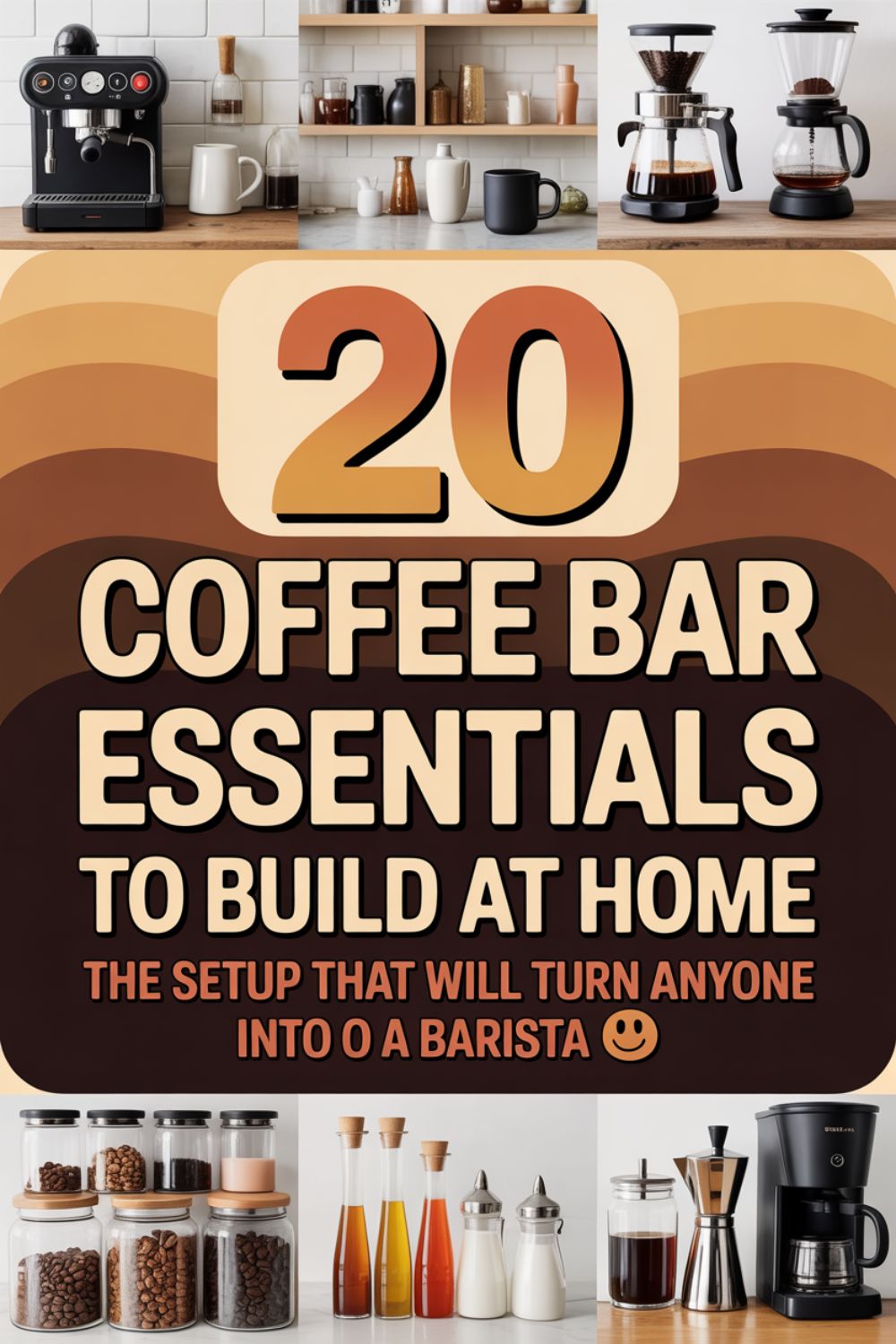
20 Coffee Bar Essentials to Build at Home
Look, I get it. You’re tired of paying seven bucks for a latte that tastes like burnt regret. I’ve been there, standing in line while the barista misspells my name for the thousandth time. Building a home coffee bar isn’t just about saving money—it’s about taking back control of your morning ritual and actually enjoying it.
After years of experimenting (and yes, wasting money on gadgets that now collect dust), I’ve figured out what you actually need versus what Instagram wants you to think you need. This isn’t some minimalist fantasy or a maxed-out espresso shrine. This is the real deal—twenty essentials that’ll transform your kitchen counter into a legit coffee station.
1. A Quality Burr Grinder
Here’s the truth nobody tells you: your fancy beans mean absolutely nothing if you’re grinding them in a blade grinder. I learned this the hard way after buying expensive single-origin beans and wondering why they tasted like cardboard.
Burr grinders crush beans between two revolving abrasive surfaces, giving you consistent particle size that actually matters for extraction. According to the National Coffee Association, grind consistency is one of the most crucial factors in brewing quality coffee. You’ll taste the difference immediately—no more bitter, over-extracted sludge mixed with sour, under-extracted water.
I use this conical burr grinder every single morning. It’s not the cheapest option, but it hasn’t let me down in three years. The grind settings are actually useful, not just decorative numbers that all produce the same mediocre result.
2. Fresh, Whole Bean Coffee
If you’re still buying pre-ground coffee, we need to talk. Coffee starts losing flavor within fifteen minutes of grinding. Those bags sitting on grocery store shelves? They were ground weeks ago, maybe months.
Buy whole beans from local roasters or reputable online sources. Check the roast date—anything over two weeks old is already past its prime. Store them in an airtight container away from light and heat. Proper coffee storage protects beans from their four enemies: air, moisture, heat, and light.
For something simple but seriously delicious, check out these quick coffee drinks with 3 ingredients or less. Sometimes the best coffee is the one you’ll actually make.
3. An Airtight Storage Container
Those cute glass jars on Pinterest? They’re killing your coffee. Light degrades coffee beans faster than you’d think, breaking down the delicate flavor compounds you paid good money for.
Get an opaque, airtight coffee canister with a CO2 valve. The valve lets carbon dioxide escape (beans release it for days after roasting) without letting oxygen in. I keep mine in a cabinet, away from the stove and that sunny spot everyone thinks is cute for coffee storage.
4. A Reliable Espresso Machine or Alternative
The espresso machine debate gets heated, and honestly? You don’t need a $3,000 monster taking up half your counter. But you do need something that can pull a decent shot.
I started with a manual espresso maker that cost less than two weeks of Starbucks runs. It required actual effort, sure, but the coffee was leagues better than anything I’d made before. If you want to go electric, look for machines with 15 bars of pressure minimum and a reliable temperature control system.
Not ready for the espresso commitment? A quality French press or pour-over setup works beautifully. Speaking of which, if you’re curious about ditching the machines entirely, these coffee latte recipes you can make without a machine are surprisingly legit.
5. Milk Frother
The difference between okay coffee and cafe-quality drinks often comes down to properly frothed milk. Those cheap battery-operated whisks from Amazon? They make bubbles, not microfoam. There’s a massive difference.
For starting out, a handheld milk frother with a stand does the job without breaking the bank. Heat your milk separately (don’t microwave it, please), then froth until you get that silky, paint-like consistency. If you’re serious about it, a steam wand attachment or standalone milk frother is worth every penny.
6. A Kitchen Scale
Measuring coffee by volume is like trying to bake a cake by vibes—it might work, but probably won’t. Coffee beans vary in size and density, so a scoop of light roast weighs differently than dark roast.
A simple digital scale accurate to 0.1 grams changed my coffee game completely. I use a 1:17 ratio (one gram of coffee to seventeen grams of water) as my starting point, then adjust based on taste. No more guessing, no more wasted beans on terrible cups.
7. Temperature-Controlled Kettle
Different brewing methods need different water temperatures. Pour-over coffee shines at 195-205°F, while delicate light roasts might prefer the lower end of that range. Boiling water burns everything and extracts all the bitter compounds you’re trying to avoid.
A gooseneck kettle with temperature control isn’t just pretty—that precise spout gives you control over your pour rate, which affects extraction. I went with an electric gooseneck kettle with preset temperatures because standing over a stovetop kettle with a thermometer got old fast.
8. Quality Filters
Not all paper filters are created equal. Cheap filters can add papery flavors to your coffee, and they tear at the most inconvenient moments. Cloth filters are reusable and environmentally friendly, but they require maintenance that I’m honestly too lazy for most mornings.
I keep both bleached and unbleached paper filters on hand. Bleached filters need rinsing to remove chemical residue, unbleached filters need rinsing to remove paper taste. Pick your poison. For my pour-over, I use premium cone filters that never collapse mid-brew.
Looking for more ways to level up your coffee routine? These easy homemade coffee recipes range from simple to show-stopping, and every single one is worth trying.
9. A Pour-Over Dripper
Pour-over coffee gets labeled as pretentious, but it’s genuinely one of the most forgiving brewing methods once you nail the basics. The Hario V60, Kalita Wave, and Chemex each have their cult followings for good reason—they all make excellent coffee with slightly different characteristics.
I started with a V60 because it’s cheap and nearly indestructible. The technique takes practice (my first attempts were… questionable), but there’s something meditative about the manual brewing process. Plus, you can’t accidentally leave it on and burn down your house, unlike certain auto-drip machines I won’t name.
10. A French Press
The French press is the coffee world’s most underestimated workhorse. People dismiss it as too simple, but immersion brewing produces a full-bodied cup that pour-over can’t replicate. The oils and fine particles that paper filters remove? They’re actually flavor.
A double-wall insulated French press keeps your coffee hot without requiring a warming plate that cooks it into bitterness. The four-minute brew time is idiot-proof—set a timer, walk away, come back to great coffee.
Coffee Bar Must-Haves I Actually Use
After building out my home coffee setup, these are the tools and resources that earn their counter space every single day. No fluff, just stuff that works.
Physical Products:
Precision Pour-Over Scales – Built-in timer, 0.1g accuracy, actually fits under your dripper. Mine’s survived three years of daily abuse and spilled coffee.
Milk Frothing Pitcher with Thermometer – Stop guessing milk temperature. The built-in thermometer means perfectly textured foam every time, not scalded disappointment.
Coffee Bean Storage Set – Comes with three airtight canisters with date trackers. I rotate between different bean varieties without flavor contamination. Game changer.
Digital Resources:
Coffee Brewing Ratio Calculator App – Takes the math out of scaling recipes up or down. Saved me from many mediocre pots.
Home Barista Video Course – Worth every penny. Learned proper tamping pressure, milk steaming techniques, and why my shots were pulling too fast.
Coffee Flavor Wheel Guide – Helps you actually describe what you’re tasting instead of just saying “good” or “bad.” Your palate develops faster when you have vocabulary for it.
11. Espresso Tamper
If you’re pulling espresso shots, a proper tamper is non-negotiable. That plastic thing that came with your machine? Throw it away. Uneven tamping pressure leads to channeling, where water finds the path of least resistance and ruins your extraction.
A calibrated tamper that clicks at 30 pounds of pressure eliminates the guesswork. Every tamp is consistent, every shot has a fighting chance. The weight and feel of a quality tamper also make you look way more competent than you probably are.
12. Knock Box
Spent espresso pucks are wet, they’re messy, and they will stain your sink if you’re not careful. A knock box contains the chaos and makes cleanup actually bearable.
I use a compact knock box with a removable bar that tucks next to my machine. Empty it daily (seriously, don’t let it mold), and it’ll make your workflow so much smoother. Small thing, big difference.
13. Coffee Syrups and Flavorings
Store-bought syrups are absurdly expensive for what’s basically sugar water with artificial flavoring. Making your own takes twenty minutes and costs pennies.
Simple syrup is one part sugar, one part water, heated until dissolved. Add vanilla beans, cinnamon sticks, or whatever flavors you want. Cool it, bottle it, refrigerate it. Boom—custom coffee syrups without the chemical aftertaste. For more creative options, check out these creative coffee syrup recipes that beat anything you’d buy at the store.
14. A Collection of Quality Mugs
The mug matters more than you think. Thick ceramic mugs hold heat longer, double-walled glass mugs look Instagram-worthy, and the right size prevents you from making either a thimble or a soup bowl of coffee.
I have 6oz cups for espresso, 12oz for cappuccinos, and 16oz for lazy Sunday Americanos. Different drinks deserve different vessels. Also? Drinking from a mug you actually like makes coffee taste better. That’s not science, that’s just facts.
15. Cleaning Supplies
Nobody talks about this enough: dirty equipment makes terrible coffee. Coffee oils go rancid, residue builds up, and your expensive beans get tainted by last week’s funk.
Get espresso machine cleaning tablets, a descaling solution for your kettle, and grinder cleaning tablets that look like beans but break down oil buildup. Clean your grinder monthly, backflush your espresso machine weekly, descale your kettle when it gets crusty. Future you will appreciate present you’s effort.
If you’re exploring different brewing methods, these iced coffee drinks prove you don’t need to spend a fortune to beat the coffee chains at their own game.
16. Thermometer
Temperature control separates amateur coffee from professional-grade drinks. Milk should be steamed to 140-160°F—any hotter and you’re destroying the sweetness, any cooler and it’s lukewarm disappointment.
A instant-read thermometer is useful for way more than coffee (cooking meat, tempering chocolate, checking bath water for your fancy skincare routine), so it’s an easy investment to justify. Clip-on thermometers work great for milk pitchers, too.
17. A Good Water Filter
Coffee is 98% water. If your tap water tastes like chlorine or minerals, your coffee will too. This seems obvious, but I’ve watched people spend $30 on beans and brew them with water they wouldn’t drink straight.
A simple carbon filter pitcher handles most water issues. For hardcore optimization, some people get specific coffee water filter systems, but honestly? As long as it tastes clean when you drink it plain, you’re probably fine.
18. Ice Cube Trays for Coffee Ice
Regular ice cubes dilute your iced coffee into sad, watery regret. Coffee ice cubes melt into more coffee flavor, not less. It’s such a simple fix that makes a massive difference.
Brew extra coffee in the morning, let it cool, freeze it in large silicone ice cube trays. I also freeze leftover cold brew this way. Waste nothing, enjoy everything. For more cold coffee inspiration, try these cold brew variations that go way beyond basic.
19. Timer
Consistency requires timing. Your French press needs exactly four minutes. Your pour-over bloom should be thirty seconds. Your espresso shot should pull in twenty-five to thirty seconds. Guessing leads to chaos.
Most phones have built-in timers, but having a dedicated kitchen timer means you’re not getting distracted by notifications mid-brew. Or just get a coffee scale with a timer built in and kill two birds with one stone.
20. A Notebook for Coffee Notes
This sounds pretentious until you realize you can’t remember which beans you loved or what ratio made that perfect cup last Tuesday. A simple notebook documenting bean origin, grind size, water temp, brew time, and taste notes will level up your coffee faster than any expensive equipment.
I keep mine next to my grinder. When something tastes amazing, I write down what I did. When something tastes like battery acid, I write down what to never do again. Six months of notes taught me more about my preferences than six years of random experimentation.
Looking for ways to put all this equipment to use? These five-minute coffee drinks prove that quality doesn’t always require complexity. Sometimes you just need coffee, and you need it fast.
Putting It All Together
You don’t need all twenty items on day one. Hell, you might never need all of them. I built my coffee bar over two years, adding pieces as I figured out what I actually used versus what collected dust.
Start with the fundamentals: grinder, fresh beans, brewing method, scale. Get those right, and you’re already making better coffee than 90% of home brewers. Add the temperature-controlled kettle when you’re ready to optimize. Invest in the espresso machine when you know you’ll use it. Buy the knock box when you’re sick of cleaning portafilters in the sink.
The goal isn’t building some pristine coffee shrine—it’s making drinks you genuinely want to wake up for. Some mornings that’s a perfectly pulled espresso with hand-frothed microfoam. Other mornings it’s coffee dumped over ice cubes with a splash of oat milk. Both are valid, both are delicious, both beat paying $7 for something spelled wrong on a cup.
For complete beginners just getting started, these coffee drinks for new brewers will build your confidence without overwhelming you. Start simple, build skills, upgrade equipment as you go.
Frequently Asked Questions
Do I really need a burr grinder, or will a blade grinder work?
Blade grinders chop beans unevenly, creating a mix of powder and chunks that extract at different rates. This results in simultaneously bitter and sour coffee. Burr grinders crush beans uniformly, giving you consistent extraction and significantly better flavor. If you’re investing in quality beans, a burr grinder isn’t optional—it’s essential. You can find decent entry-level burr grinders for under $40 that’ll outperform any blade grinder.
How long do coffee beans stay fresh after opening?
Whole beans maintain peak flavor for about two weeks after opening if stored properly in an airtight, opaque container away from light and heat. They’re still drinkable for several weeks beyond that, but you’ll notice the complexity and aroma fading. This is why buying smaller batches more frequently beats stocking up on bulk beans—unless you’re going through a pound every week, freshness suffers.
What’s the best ratio of coffee to water for brewing?
The standard starting point is 1:17 (one gram of coffee to seventeen grams of water), but this varies by brewing method and personal preference. French press often works better at 1:15 for a fuller body, while pour-over can go to 1:18 for a cleaner cup. Start with 1:17, taste your coffee, then adjust—more coffee if it’s weak, less if it’s too intense. Use a scale for consistency.
Should I store coffee beans in the freezer?
Only if you’re storing unopened bags long-term. Once opened, freezing beans exposes them to moisture from condensation every time you take them out, which degrades quality. The freezer works for bulk storage of sealed bags you won’t use for months, but for daily coffee, room temperature in an airtight container is your best bet. Never refreeze beans once they’ve thawed.
Is expensive equipment worth it for casual coffee drinkers?
Not necessarily. The biggest improvements come from fresh beans, proper grinding, and correct technique—all achievable with modest equipment. A $50 burr grinder and a $30 pour-over setup will produce infinitely better coffee than a $300 machine with stale pre-ground beans. Invest gradually based on what you’ll actually use. If you only drink coffee on weekends, skip the $800 espresso machine. If you’re making three lattes daily, it pays for itself in two months.
Final Thoughts
Building a home coffee bar is less about accumulating stuff and more about understanding what makes coffee taste good. You’ll waste money on things that sounded cool but don’t fit your routine. You’ll also discover that some cheap tools outperform expensive alternatives because they just work better for how you brew.
The equipment matters, but technique matters more. The beans matter most of all. Start simple, focus on consistency, and upgrade when you’ve actually mastered what you have. Your kitchen counter is limited. Your coffee budget is limited. Make both count.
Also? There’s no shame in occasionally buying a fancy latte from your local cafe. Supporting small roasters and skilled baristas is part of coffee culture. But on regular Tuesday mornings when you just need caffeine and a moment of peace before the chaos starts? That’s when your home coffee bar earns its keep.
Now stop reading, go make some coffee, and actually enjoy it. You’ve got the tools. You’ve got the knowledge. The only thing missing is beans in the grinder and water in the kettle.
Similar Posts
25 Iced Coffee Drinks for Warm Spring Days
25 Iced Coffee Drinks for Warm Spring Days | PlatefulLife Spring Coffee Guide 25 Iced Coffee Drinks for Warm Spring Days Cold, creamy, and ridiculously easy to make at home — your warm-weather coffee era starts now. By PlatefulLife | Updated Spring 2025 | 12 min read The moment you feel that first warm spring…
17 High-Protein Coffee Recipes for Breakfast
17 High-Protein Coffee Recipes for Breakfast | Plateful Life Plateful Life Breakfast + Coffee + Protein 17 High-Protein Coffee Recipes for Breakfast Because your morning coffee should do more than just wake you up — it should fuel you through until lunch. By Plateful Life | Updated 2025 | 17 Recipes Let’s be real for…
17 Sugar-Free Coffee Drinks for Weight Loss
17 Sugar-Free Coffee Drinks for Weight Loss | PlatefulLife PlatefulLife — Real Food, Real Life Coffee + Weight Loss 17 Sugar-Free Coffee Drinks for Weight Loss Creamy, bold, and completely guilt-free — these drinks make cutting sugar the easiest decision you’ll make all day. By PlatefulLife Staff • Updated 2025 • 12 min read Let’s…
15 Light Roast Coffee Drink Ideas That’ll Actually Wake Up Your Taste Buds
15 Light Roast Coffee Drink Ideas That’ll Actually Wake Up Your Taste Buds 15 Light Roast Coffee Drink Ideas That’ll Actually Wake Up Your Taste Buds Look, I get it. You’ve been standing in front of your coffee maker for the past five minutes, staring at that bag of light roast like it’s going to…
20 Cozy Coffee Table Books for Caffeine Lovers
20 Cozy Coffee Table Books for Caffeine Lovers 20 Cozy Coffee Table Books for Caffeine Lovers Look, I get it. Your coffee table probably has three remotes, yesterday’s mail, and maybe a half-empty mug you swore you’d deal with later. But what if I told you that same surface could become a shrine to your…
15 Coffee Desserts That Pair Perfectly with Your Brew
15 Coffee Desserts That Pair Perfectly with Your Brew 15 Coffee Desserts That Pair Perfectly with Your Brew Coffee and dessert might be the most underrated power couple in food history. Sure, everyone talks about wine pairings like they’re rocket science, but pairing the right dessert with your coffee? That’s where the real magic happens….