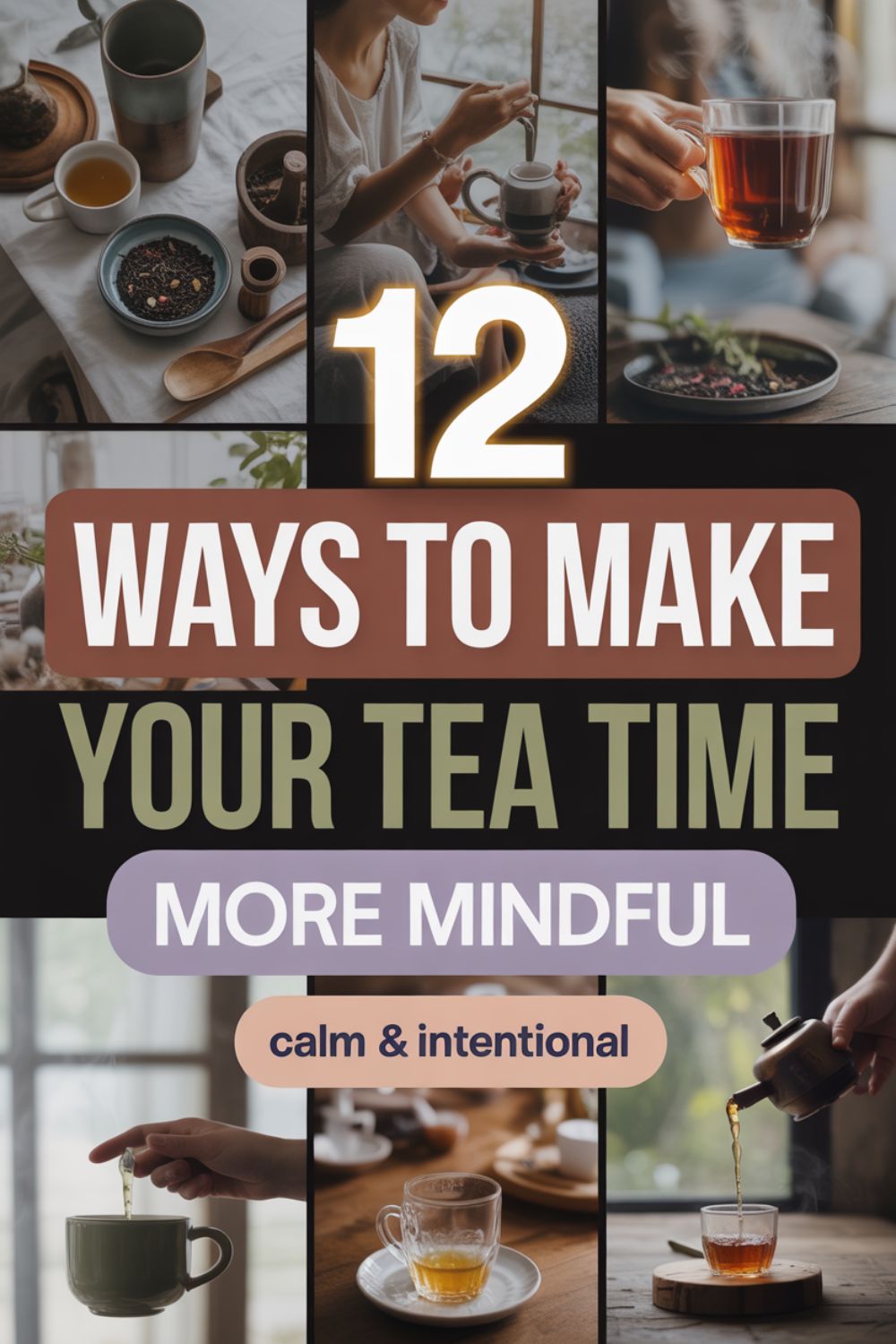
12 Ways to Make Your Tea Time More Mindful
Your daily tea break is about to become your favorite meditation practice
Look, I get it. You’re probably reading this while juggling seventeen browser tabs, a half-cold cup of something vaguely tea-flavored, and a mental to-do list that could fill a novel. But here’s the thing: that humble cup of tea sitting on your desk? It’s basically a portal to peace disguised as a beverage.
I spent years treating tea like just another checkbox on my morning routine—boil water, dunk bag, scroll phone, repeat. Then one particularly chaotic Tuesday, I actually paid attention to what I was drinking. Watched the steam rise. Noticed the color shift as the leaves steeped. Felt the warmth spread through my hands. It sounds almost embarrassingly simple, but that five-minute pause completely shifted my entire day.
Tea and mindfulness aren’t just compatible—they’re kind of perfect for each other. Research shows that bringing awareness to simple activities like tea drinking helps train our attention and reduces the autopilot mode most of us live in. And unlike sitting cross-legged trying not to think about your grocery list, tea meditation gives your mind something concrete to focus on.
1. Start With Intentional Selection
Before you even touch the kettle, pause. What does your body actually need right now? Are you seeking calm, energy, focus, or comfort? This isn’t about overthinking—it’s about tuning in.
I keep a small collection of different teas specifically for this reason. Green tea when I need gentle alertness, chamomile for evenings when my brain won’t shut up, peppermint when I need to feel refreshed. The act of choosing becomes the first step in your mindfulness practice. If you’re looking for teas specifically crafted for calm and focus, these tea recipes are absolute game-changers.
According to UC Davis research on tea meditation, the natural compounds in tea—particularly L-theanine—actually support the relaxation response while maintaining alertness. It’s like your brain gets to be both chill and sharp at the same time.
2. Engage Your Senses During Preparation
This is where most of us completely zone out, right? We’re already mentally three tasks ahead while the kettle boils. But the preparation phase is pure mindfulness gold.
Listen to the water. Seriously. Notice how the sound changes as it heats—starts as a whisper, builds to a rumble, then that distinct rolling boil. Watch the steam start to rise. If you’re using loose leaf tea, feel the dry leaves between your fingers before you measure them out. I use this glass teapot specifically because watching the leaves unfurl is oddly mesmerizing.
The temperature matters too, and not just for flavor. Paying attention to whether your tea needs boiling water or something cooler forces you to slow down. I swear by this variable temperature kettle because it takes one more decision out of the equation while still keeping me present.
3. Create a Dedicated Tea Space
You don’t need a zen garden or a Japanese tea room (though honestly, wouldn’t that be nice?). Just a specific spot where you drink your tea. It could be a corner of your kitchen counter, a particular chair, or even a spot by a window.
The point is consistency. Your brain starts to associate that space with slowing down. Mine’s a slightly beat-up armchair that faces my backyard. Nothing fancy. But when I sit there with tea, my shoulders automatically drop about two inches.
If you’re tight on space, even a small bamboo tray that you only bring out for tea time works. It’s about creating a ritual boundary between “everything else” and “this moment right here.”
4. Practice Breath Awareness
Here’s where tea meditation borrows straight from traditional meditation practices. While your tea steeps, breathe. Not some complicated breath pattern—just notice your breath.
Inhale for the count of four while you smell the steam rising. Hold for two. Exhale for six while you watch the color deepen. The physiological benefits of pairing breath work with tea are well-documented—it activates your parasympathetic nervous system, which is basically your body’s “chill out” button.
I’ll be honest, the first few times I tried this, I felt ridiculous. But now? It’s the part I actually crave. Three minutes of just breathing and watching tea steep has become more valuable than scrolling social media for thirty.
5. Observe the Visual Transformation
Watch your tea like you’re getting paid for it. The way clear water slowly transforms into amber or green or deep brown is genuinely beautiful if you actually look at it.
I started using a clear glass cup specifically for this reason. You can see the whole process—the way the color blooms from the tea bag or spreads from loose leaves, creating these temporary patterns before everything mixes together.
This isn’t about being precious or Instagram-worthy. It’s about training your brain to notice details it usually skips right over. And somehow, noticing those small things makes everything else feel less overwhelming.
6. Eliminate Distractions Completely
Okay, this is the hard one. No phone. No laptop. No TV in the background. Not even “just one quick email.” For ten minutes, it’s just you and the tea.
I know, I know. But here’s the reality check: we spend approximately zero minutes of our day doing only one thing. Tea time can be that rare exception. And weirdly, those ten distraction-free minutes make the other hours more productive, not less.
If the thought of sitting with zero stimulation makes you twitchy (same), start with five minutes. Put your phone in another room. Use a simple kitchen timer so you’re not clock-watching. The first few times feel eternal. Then something shifts.
For more ideas on building calming routines around tea, check out these afternoon tea pairings that turn a simple break into a genuine reset moment.
7. Use All Five Senses
This is where tea meditation gets delightfully specific. You’re not just drinking tea—you’re experiencing it with every sense you’ve got.
Sight: The color, the steam patterns, how light moves through the liquid. Sound: The pour, the clink of cup on saucer, the almost-silence of steam. Smell: Different notes reveal themselves as it cools—what you smell immediately versus five minutes later. Touch: The temperature of the cup, the weight, the smoothness of the ceramic. Taste: The obvious one, but actually notice the different flavors as it hits different parts of your tongue.
I use these handmade ceramic cups because the texture adds another sensory layer. The slight roughness of the clay grounds me in a way smooth porcelain doesn’t. It’s a tiny detail that makes a real difference.
8. Practice Gratitude Between Sips
This might sound insufferably wholesome, but stick with me. Between sips, think about one thing that went into getting this tea to your cup. The plants that grew. The people who harvested them. The water you have clean access to. The fact that you have ten minutes to spare.
I’m not naturally a gratitude journal person, but this version actually works for me. It’s specific, it’s brief, and it pulls me out of whatever mental spiral I was in. Some days I’m grateful for the tea itself. Other days I’m just grateful I remembered to buy tea at all.
Speaking of which, if you’re curious about the cultural and historical significance of tea practices, traditional Japanese tea ceremonies have centered gratitude for centuries. We’re not reinventing the wheel here—just making it work for modern life.
Tea Mindfulness Essentials
9. Notice Thoughts Without Following Them
Here’s the thing nobody tells you about meditation: your brain will absolutely not shut up. Thoughts will crash your tea party uninvited. The grocery list, that awkward thing you said in 2014, whether you replied to that email—it all shows up.
The practice isn’t stopping thoughts (impossible). It’s noticing them, acknowledging they exist, and gently bringing your attention back to the tea. “Oh, there’s the work anxiety. Anyway, this tea tastes like…” It’s like training a very enthusiastic puppy. Consistent redirecting, zero judgment.
Some days you’ll redirect your attention fifty times in five minutes. That’s not failure—that’s literally the practice. The noticing is the point, not the perfect stillness.
10. Explore Temperature Variations
This one’s subtle but surprisingly effective. Notice how the tea changes as it cools. The first sip when it’s almost too hot. The sweet spot where all the flavors open up. The final, room-temperature sips (okay, sometimes those are just sad, but notice that too).
Different temperatures reveal different aspects of the same tea. It’s like listening to a song at different volumes—same notes, completely different experience. I’ve started intentionally waiting to let my tea cool slightly because that’s when I actually taste the most complexity.
A double-walled glass cup keeps tea warm longer without being too hot to hold, which means you can actually pay attention to subtle temperature shifts without burning your fingers.
11. Create a Closing Ritual
How you end your tea time matters as much as how you start it. Before you rush back into everything else, take three conscious breaths with your empty cup still in your hands.
I set the cup down slowly, feel my feet on the floor, and consciously note one thing I’m taking back into my day. Sometimes it’s actual calm. Sometimes it’s just the memory that I’m capable of slowing down. Either way, it creates a bridge between the meditation and whatever comes next.
This is also when I clean up mindfully—rinsing the cup, feeling the warm water, noticing the transition back into activity. Sounds overly detailed, but it prevents that jarring crash from peaceful to chaotic.
12. Extend Mindfulness Beyond the Cup
Here’s where it gets really interesting. The attention you cultivate during tea time starts bleeding into everything else. You notice flavors in your regular meals more. Conversations feel more present. Even washing dishes becomes less of a chore when you’re actually paying attention to the sensation of warm water and soap bubbles.
I’m not saying tea meditation will fix your life (though honestly, it’s helped mine considerably). But it creates these little pockets of presence that expand. You remember what it feels like to be fully here instead of mentally three hours ahead or two days behind.
The research backs this up too. Studies on tea meditation practices show that regular practitioners report reduced stress and improved mood that extends well beyond their actual tea time. It’s like training wheels for mindfulness—concrete enough to focus on, flexible enough to fit into real life.
And honestly? If you’re going to drink tea anyway (which most of us are), you might as well actually show up for it. The tea tastes better, the moment feels richer, and you get ten minutes of actual peace in a world that’s aggressively designed to prevent exactly that.
For more ways to build mindful moments into your routine, these warming morning drinks and simple beverage ideas can also become opportunities for presence if you approach them intentionally.
Frequently Asked Questions
How long should a mindful tea practice take?
Start with just 5-10 minutes. Seriously, that’s enough. You’re not trying to achieve enlightenment—you’re just trying to actually be present for one cup of tea. As it becomes natural, you might extend to 15-20 minutes, but don’t force it. Quality beats duration every single time.
What if my mind keeps wandering during tea meditation?
It will. That’s completely normal and actually part of the practice. The goal isn’t stopping thoughts—it’s noticing when they happen and gently redirecting attention back to the tea. Think of it like training a puppy: consistent, patient redirecting without frustration. The noticing itself is the skill you’re building.
Do I need special tea for mindful tea drinking?
Nope. Any tea works—bag, loose leaf, fancy, cheap, doesn’t matter. That said, you might find you prefer certain teas for mindfulness practice because they’re more engaging to your senses. But don’t let “not having the right tea” stop you from starting. Use whatever you’ve got.
Can I practice tea mindfulness with coffee instead?
Absolutely. The principles are identical. Coffee actually works great because it has such distinct aroma and flavor notes to focus on. The key is slowing down and actually paying attention, regardless of what’s in your cup. If coffee’s your thing, these coffee recipes can become mindfulness practices too.
Is it okay to practice mindful tea drinking while doing other things?
Technically, you can bring mindfulness to any activity. But for building the actual skill, dedicate at least a few minutes to just the tea. Think of it as strength training for your attention—you need focused practice time, then you can apply it more broadly. Start with dedicated sessions, then let it expand naturally.
The Takeaway
Mindful tea drinking isn’t about adding another complicated wellness routine to your already-full schedule. It’s about actually showing up for something you’re probably doing anyway. Ten minutes. One cup. Zero judgment about whether you’re “doing it right.”
I’ve been practicing this for over a year now, and some days are still a disaster. My mind wanders, I get impatient, I accidentally check my phone. But more days than not, I get those few minutes of genuine presence. And honestly? That’s enough to make a difference.
Your tea is waiting. Maybe make it count.